
This article breaks down the contaminant categories you need to target, the filtration mechanisms that work against them, and how the major filter types compare on removal rates. Skip to the protocol if you want the bottom line. Read the full breakdown if you want to understand why.
The Endocrine Disruptors in Your Water Supply
Tap water in the US is regulated under the Safe Drinking Water Act, which sets maximum contaminant levels (MCLs) for a defined list of substances. The problem is that the regulatory framework was not designed with endocrine disruption as its primary metric, and many EDCs are present at concentrations below legal limits while still demonstrating biological activity at those concentrations.
The major EDC categories found in municipal and well water:
Atrazine is one of the most widely detected herbicides in US water supplies, particularly in agricultural regions. It is a potent aromatase inducer – meaning it upregulates the enzyme that converts testosterone to estrogen. A 2010 study published in the Proceedings of the National Academy of Sciences found that atrazine exposure chemically castrated male frogs and induced complete sex reversal at concentrations as low as 2.5 parts per billion (ppb). The EPA MCL is 3 ppb. Male reproductive effects in human populations living near agricultural runoff remain an active area of research.
Phthalates and bisphenol compounds (BPA, BPS) enter water primarily through industrial discharge and plastic infrastructure leaching. BPA binds to estrogen receptors and has been associated with reduced testosterone, lower sperm quality, and thyroid disruption in epidemiological studies. The replacement compounds BPS and BPF, marketed as "BPA-free," demonstrate similar or greater estrogenic activity in in vitro assays.
Per- and polyfluoroalkyl substances (PFAS) – often called "forever chemicals" – are synthetic fluorinated compounds used in industrial coatings, firefighting foam, and non-stick cookware. They are extremely persistent, bioaccumulate in tissue, and have been associated with thyroid hormone disruption, immune dysfunction, and altered testosterone levels. PFAS have been detected in the drinking water of an estimated 200 million Americans according to the Environmental Working Group.
Chlorine disinfection byproducts (DBPs) – trihalomethanes and haloacetic acids formed when chlorine reacts with organic matter in source water – are themselves weakly estrogenic. They're a secondary concern relative to the above but worth addressing in a comprehensive protocol.
Heavy metals – lead, arsenic, cadmium – are not classic endocrine disruptors but interfere with hormonal signaling through multiple mechanisms including thyroid function disruption and oxidative stress pathways. Lead exposure specifically has been linked to reduced testosterone in adult men.
Filtration Mechanisms: What Works Against What
Different filter technologies work through different mechanisms, and their effectiveness varies significantly by contaminant category. Understanding the mechanism is the basis for selecting the right system.
Activated carbon (AC and GAC) works through adsorption – contaminants bind to the porous carbon surface and are removed from the water stream. Carbon is effective against chlorine, chloramines, many pesticides including atrazine, volatile organic compounds (VOCs), and some phthalates. It has limited effectiveness against heavy metals, nitrates, fluoride, and PFAS – particularly short-chain PFAS compounds, which have lower affinity for carbon surfaces than longer-chain variants.
Reverse osmosis (RO) works through semi-permeable membrane filtration. Water is forced under pressure through a membrane with pores small enough (approximately 0.0001 microns) to reject dissolved solids, ionic compounds, and most organic molecules. RO removes heavy metals, nitrates, fluoride, most PFAS, and a broad spectrum of organic contaminants at high efficiency. It generates wastewater (typically 3–4 gallons rejected per gallon produced) and removes beneficial minerals alongside contaminants, which requires consideration.
Ion exchange (IX) resins attract and hold specific ionic species from the water. Cation exchange resins target positively charged ions including lead, cadmium, and other heavy metals. Anion exchange resins can capture certain anionic PFAS compounds. Specialized resins (MIEX, for example) have been developed specifically for EDC and pharmaceutical compound removal and are used in advanced municipal treatment.
Ultrafiltration (UF) uses membranes with larger pore sizes than RO (0.01–0.1 microns) and removes bacteria, viruses, and particulates but is not effective against dissolved organic chemicals or ionic contaminants. It is not a primary intervention for EDC removal.
Solid block carbon differs from granular activated carbon (GAC) in that the compressed block format eliminates channeling – water cannot bypass the filter media – and provides longer contact time with the carbon surface. This improves removal efficiency for organics and chlorination byproducts compared to GAC at equivalent flow rates.
System Comparison by EDC Category
Reverse Osmosis
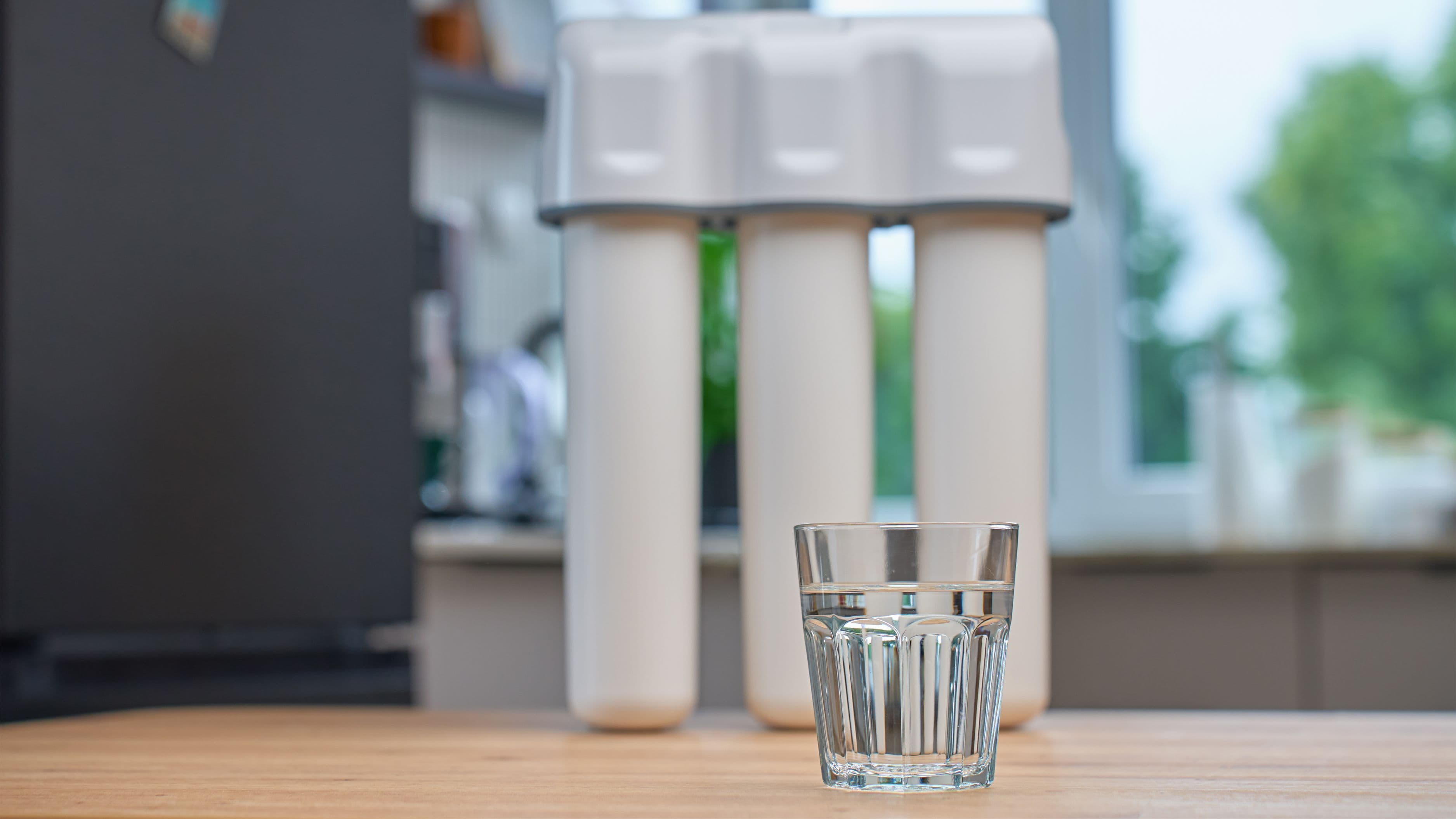
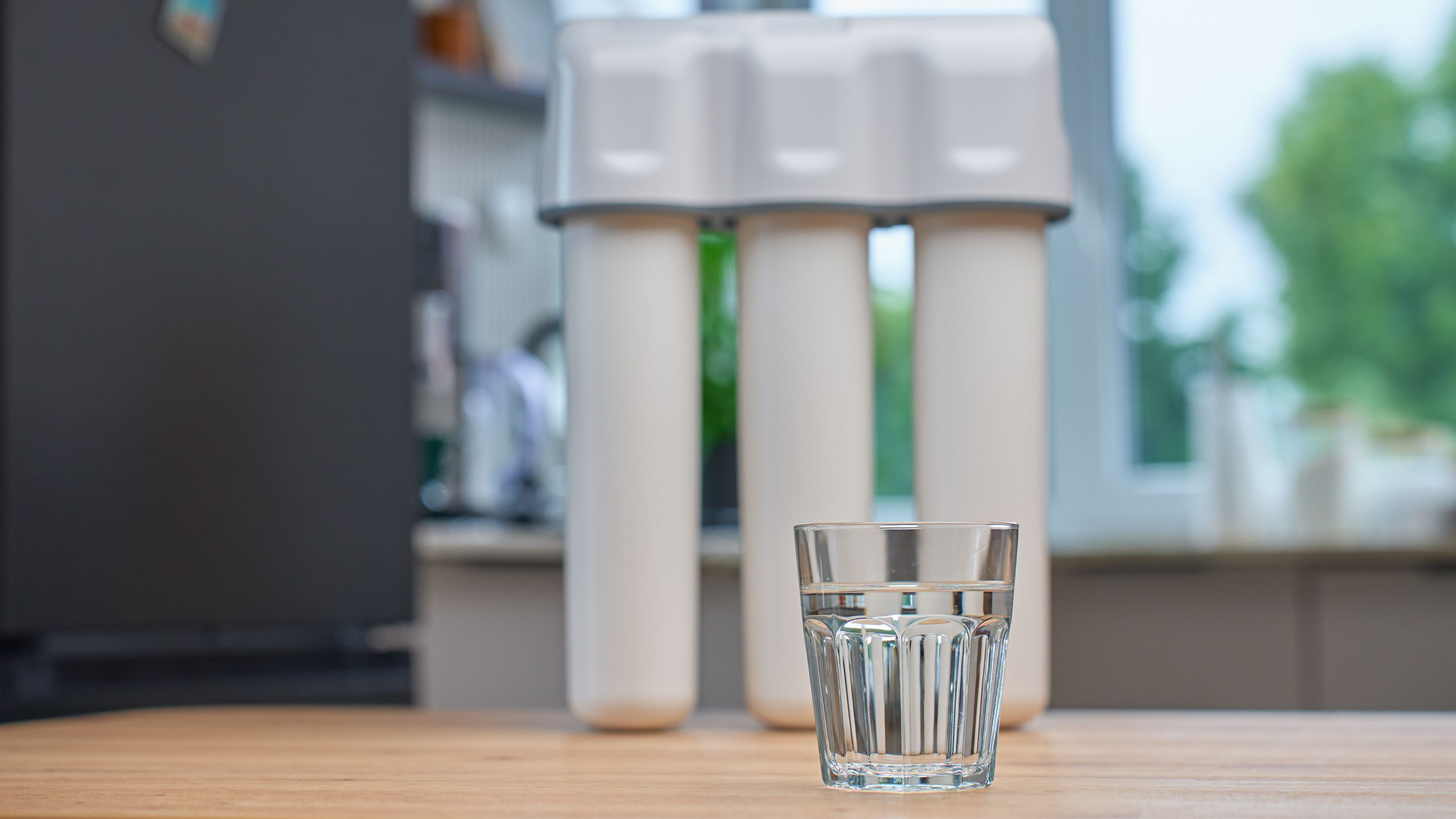
RO is the highest-performing single technology for broad-spectrum EDC removal. A quality multi-stage RO system (sediment pre-filter → carbon pre-filter → RO membrane → carbon post-filter) achieves:
PFAS: 90–99% removal efficiency for most compounds (EPA data on residential RO systems)
Heavy metals (lead, arsenic, cadmium): 95–99% removal
Atrazine and herbicides: 85–95% removal
Nitrates: 83–92% removal
BPA and phthalates: 80–98% removal depending on compound
The trade-offs are genuine. RO systems produce wastewater, typically requiring 3–4 gallons of source water per gallon of filtered output – relevant for water cost and environmental considerations. RO removes calcium, magnesium, and other minerals that have health value, requiring remineralization either through a post-filter stage or supplemental mineral intake. Point-of-use RO (under-sink) is practical; whole-house RO is expensive and typically unnecessary since you're not bathing in atrazine-laden water at quantities that matter biologically.
The best RO systems for a performance-focused setup: the APEC ROES-PH75 includes a remineralization stage. The iSpring RCC7AK is a widely recommended 6-stage system with alkaline remineralization. Both are well-reviewed and use NSF-certified components.
Activated Carbon + Ultrafiltration (e.g., Berkey, Clearly Filtered)
High-quality solid block carbon systems combined with additional filter stages perform well for organic compound removal and represent a practical whole-house or countertop option where RO installation isn't feasible.
The Berkey system uses a combination of carbon and proprietary media and has published independent lab results showing greater than 99.9% removal of atrazine, greater than 99.9% removal of BPA, and strong performance on chlorination byproducts. Its PFAS removal is less consistently documented across all compounds – independent testing has shown variable results for short-chain PFAS specifically.
Clearly Filtered pitchers and under-sink systems use a compressed carbon block with additional media stages and publish NSF-certified test results showing strong atrazine, BPA, and PFAS removal. Independent testing results are more consistently available than for Berkey. The pitcher format has a lower capacity and slower flow rate than under-sink or gravity systems.
The primary limitation of carbon-only systems relative to RO: heavy metal removal is inconsistent, fluoride is not effectively removed by standard carbon, and PFAS removal – particularly for short-chain variants – is less complete.
Whole-House Filtration
Whole-house systems address dermal and inhalation exposure routes alongside drinking water. Showering and bathing in chlorinated water exposes you to chloroform and other volatile DBPs through skin absorption and inhalation – a route that contributes meaningfully to total DBP exposure. A whole-house carbon filter on the main water supply reduces this exposure across all use points.
Whole-house systems are typically 10–20 micron sediment pre-filters followed by large-capacity GAC or catalytic carbon tanks. They are not a substitute for point-of-use RO or solid block carbon for drinking water – their removal efficiency for dissolved organic compounds is lower than point-of-use systems due to higher flow rates and shorter contact time. The optimal configuration for a performance-optimized home is whole-house carbon for shower/bath water plus point-of-use RO or high-performance carbon block for drinking and cooking water.
The Recommended Protocol
For a performance-focused setup prioritizing endocrine disruptor removal:
Tier 1 (drinking and cooking water): Under-sink reverse osmosis system with remineralization stage. This covers PFAS, heavy metals, atrazine, BPA/phthalates, nitrates, and chlorination byproducts at the highest removal efficiencies available outside industrial treatment. Add minerals back through the remineralization filter or supplement with a quality electrolyte containing magnesium and potassium. Budget: $200–$400 for a quality unit, $50–$80 per year in filter replacements.
Tier 1 alternative (if under-sink installation isn't feasible): Clearly Filtered under-sink or Berkey countertop with documented independent test results. Accepts some reduction in PFAS and heavy metal coverage versus RO in exchange for installation simplicity. Review current independent test results before purchasing – the filtration market moves fast and manufacturer claims vary in documentation quality.
Tier 2 (shower and bath): Whole-house GAC or catalytic carbon filter at the point of entry. Catalytic carbon is preferable to standard GAC for homes on chloraminated water (increasingly common in municipal supply) as it is more effective at catalytic reduction of chloramines. Budget: $300–$600 for a whole-house unit plus installation.
Tier 3 (audit your specific water supply first): Request your municipality's annual Consumer Confidence Report (required by the EPA, available from your water utility) and cross-reference your specific supply against EWG's Tap Water Database (ewg.org/tapwater). Your filtration priorities should be calibrated to what's actually in your source water, not a generic EDC list. If you're on well water, independent testing through a certified lab is essential – well water is not regulated under the SDWA and contamination profiles vary significantly by location.
What to Skip
Pitcher filters (Brita, PUR standard models): Standard pitcher filters use basic GAC and reduce chlorine taste and odor effectively but provide limited removal of PFAS, heavy metals, and low-polarity organic compounds including atrazine at regulated concentrations. They are not an EDC filtration strategy.
Magnetic or "structured water" devices: No credible mechanism or independent evidence supports health claims for these products. They do not remove contaminants.
UV purification as primary filtration: UV systems effectively inactivate bacteria and viruses but do not remove dissolved chemicals. UV is useful as a final stage for microbiological control, particularly on well water, but does nothing for EDC removal.
FAQ
Does boiling water remove endocrine disruptors?
No. Boiling concentrates most EDCs by reducing water volume while leaving dissolved chemicals behind. It is effective for pathogen inactivation only. Some volatile compounds like chloroform can be partially driven off by extended boiling with the pot uncovered, but this is not an efficient or reliable EDC removal strategy.
Does RO remove beneficial minerals I need?
Yes – RO removes essentially all dissolved minerals including calcium and magnesium. A remineralization post-filter stage (available on most quality RO systems) restores these. Alternatively, supplementing with a quality magnesium glycinate and consuming mineral-rich whole foods covers the gap. The trade-off between mineral loss and EDC removal favors RO if your source water contains measurable PFAS, lead, or other high-priority contaminants.
How often do RO membranes need replacement?
The RO membrane in a residential under-sink system typically lasts 2–3 years depending on source water quality and usage volume. Pre-filters (sediment and carbon) require replacement every 6–12 months and protect the membrane from premature fouling. Following the manufacturer's replacement schedule is important – a degraded membrane provides significantly lower removal efficiency.
Is fluoride removal a priority?
If hormone optimization is the goal, there is a reasonable precautionary case for fluoride reduction. Fluoride at higher concentrations has been associated with hypothyroidism in epidemiological studies, and the thyroid axis is tightly linked to testosterone regulation and metabolic function. RO removes fluoride effectively (90–95%). Standard carbon filters do not. If this is a priority and RO isn't installed, bone char carbon or alumina-based filters specifically rated for fluoride removal are alternatives.
Does the container matter after filtration?
Yes. Storing filtered water in plastic containers reintroduces BPA, BPS, and phthalates depending on the plastic type and age of the container. Use glass or stainless steel containers for filtered water storage. This is particularly important for water stored in warm environments or for extended periods.
📚 Sources
Hayes, T.B. et al. – "Atrazine induces complete feminization and chemical castration in male African clawed frogs" – PNAS https://www.pnas.org/doi/10.1073/pnas.0909519107
Environmental Working Group – "PFAS Contamination in the U.S." – ewg.org https://www.ewg.org/interactive-maps/pfas_contamination/
EPA – "Drinking Water Regulations for Per- and Polyfluoroalkyl Substances" – epa.gov https://www.epa.gov/sdwa/drinking-water-regulations-and-contaminants
EPA – "Atrazine in Drinking Water" – epa.gov https://www.epa.gov/sites/default/files/2014-09/documents/atrazine_drinkingwater.pdf
Vandenberg, L.N. et al. – "Hormones and Endocrine-Disrupting Chemicals: Low-Dose Effects and Nonmonotonic Dose Responses" – Endocrine Reviews https://academic.oup.com/edrv/article/33/3/378/2354852
NSF International – "NSF/ANSI 58: Reverse Osmosis Drinking Water Treatment Systems" – nsf.org https://www.nsf.org/consumer-resources/articles/reverse-osmosis-systems
Calafat, A.M. et al. – "Exposure of the U.S. Population to Bisphenol A" – Environmental Health Perspectives https://ehp.niehs.nih.gov/doi/10.1289/ehp.0800014