


The Mechanism: What Sauna Heat Actually Needs to Do
The research most people cite when discussing sauna benefits – reduced cardiovascular mortality, improved heat shock protein expression, and increased core temperature adaptation – comes primarily from Finnish cohort studies using traditional sauna sessions at 176–212°F (80–100°C), typically for 15–20 minutes. Dr. Jari Laukkanen's research published in JAMA Internal Medicine found that frequency and duration at these temperature ranges correlated directly with reduced cardiovascular and all-cause mortality risk, with the strongest effects seen at 4–7 sessions per week.
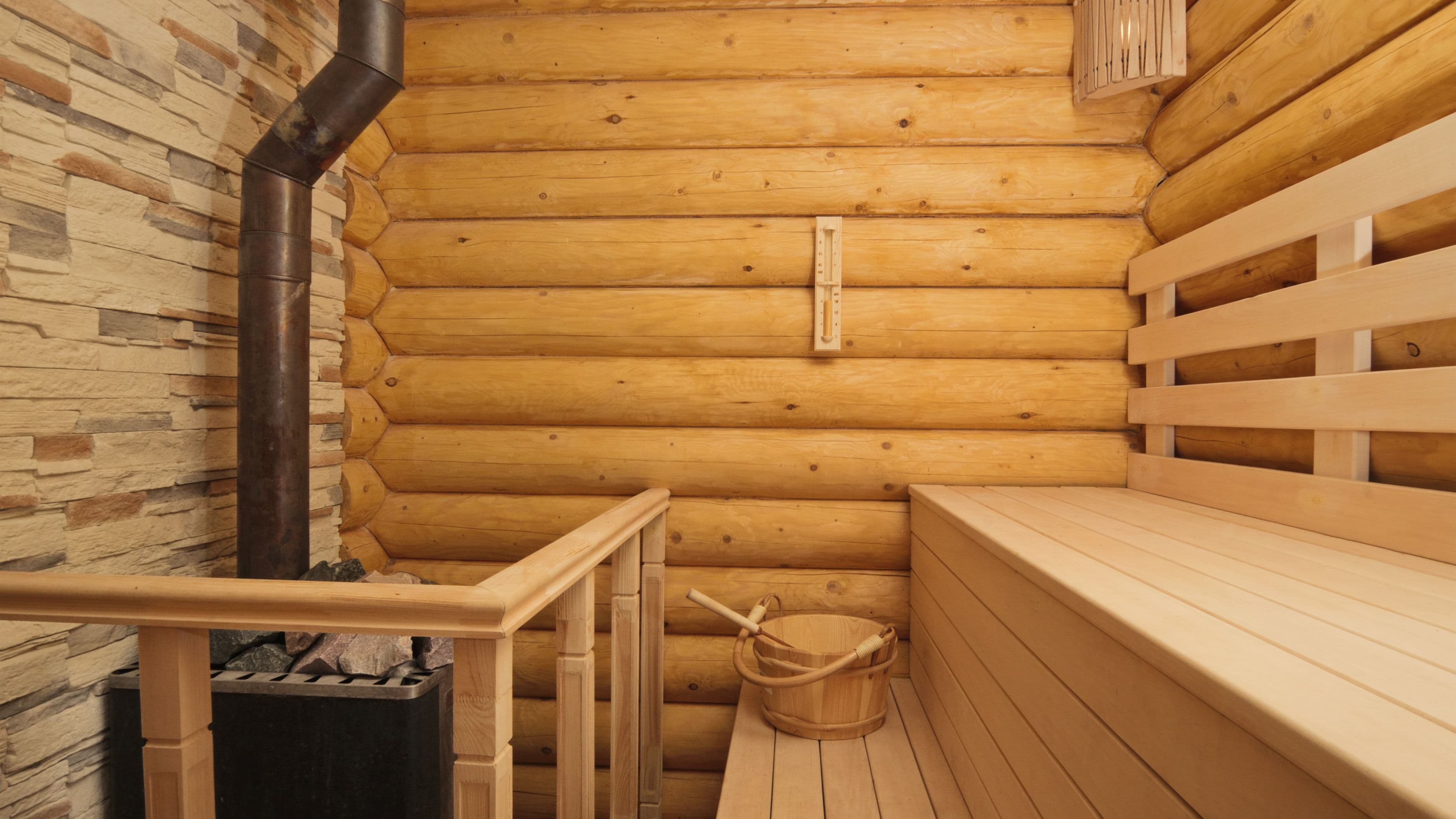
Reaching and holding these temperatures requires enough heater output to overcome both the room's heat loss and the thermal mass of the space itself. A heater that's technically capable of eventually reaching 170°F in an empty, insulated test chamber often can't reach or sustain that same temperature in a real installation with a door that gets opened, occupants adding thermal load, and imperfect insulation. This is the core problem: most home sauna heaters are sized to the minimum manufacturer specification for the room's cubic footage, with no margin for real-world heat loss.
Why Most Installations Are Underpowered
Sauna heater sizing is based on cubic footage, not floor space, and this is where most home installations go wrong from the start. The general industry guideline used by manufacturers like Harvia and Finlandia is roughly 1 kilowatt of heater output per 45–50 cubic feet of room volume for a well-insulated space, with additional wattage required for glass walls, exterior walls, or higher ceilings, since these all increase heat loss.
Home installations frequently underestimate this in several specific ways. Glass doors and windows, increasingly common in modern sauna builds for aesthetic reasons, lose heat far faster than insulated wood walls, but heater sizing calculations often don't account for this properly. Ceiling height beyond the standard 7 feet adds significant cubic volume that gets underestimated when people size heaters based on floor square footage alone rather than true volume. Additionally, many pre-fabricated home sauna kits ship with a single "standard" heater size regardless of the specific room's actual insulation quality or glass surface area, meaning the same heater gets installed in rooms with meaningfully different heat loss characteristics.
The Protocol: Fixing an Underpowered Sauna
Step 1: Calculate Your Actual Room Volume
Measure length, width, and height in feet, then multiply for total cubic footage. Add 15 percent to this number for every glass wall or door panel present, since glass surfaces lose heat significantly faster than insulated wood construction. This adjusted number is your real sizing target, not the raw cubic footage.
Step 2: Compare Against Your Current Heater Rating
Check your heater's kilowatt rating, typically listed on a nameplate or in the installation manual. Divide your adjusted cubic footage by 45–50 to get your target kilowatt range, then compare this to your current heater's rating. If your heater is rated below this range, and particularly if it's more than 20 percent below, this is very likely your primary limiting factor.
Step 3: Upgrade Heater Capacity Rather Than Just Runtime
The common mistake here is running an undersized heater longer to compensate, but this doesn't solve the underlying problem – an undersized heater often has a maximum achievable temperature ceiling regardless of runtime, especially once occupants and door openings are factored in. Upgrading to a heater rated appropriately for your adjusted cubic footage, generally in 3kW increments for typical home sauna sizes, is the direct fix rather than a workaround.
Step 4: Address Insulation and Door Seals Before Blaming the Heater
Before assuming you need a larger heater, confirm your sauna has proper vapor barrier insulation behind the wall paneling, since inadequate vapor barriers allow heat and moisture to escape into wall cavities rather than staying in the room. Check door seals specifically, as gaps here are a common and easily fixed source of continuous heat loss that can undermine even a properly sized heater.
Step 5: Add a Second Thermometer at Bench Height
Sauna thermometers are frequently mounted near the ceiling, where temperatures run significantly hotter than at seated bench height due to natural heat stratification. Add a second thermometer at the height where you'll actually be seated to get an accurate reading of the temperature your body is experiencing, rather than relying on a reading that may be 20–30°F higher than your actual exposure.
Step 6: Rebalance Session Length Once Properly Powered
Once your sauna can reliably reach 170–190°F, session length should typically decrease compared to what you were doing in an underpowered unit. Sessions of 15–20 minutes at this corrected temperature range align with the protocols used in the cardiovascular research cited above, replacing longer sessions at lower, ineffective temperatures.
Expected Results and Timeline
Heater upgrades typically restore full target temperature capability immediately upon installation, assuming proper electrical capacity is available to support the higher wattage draw. The physiological adaptations associated with consistent sauna use at appropriate temperatures – improved heat tolerance, cardiovascular adaptation markers – generally build over 4–8 weeks of consistent sessions at 4 or more times per week, consistent with the frequency ranges studied in the Finnish cohort research. This is a gradual adaptation process, not an immediate effect, and consistency at the corrected temperature and frequency matters more than any single session.
Risks, Limitations, and Common Mistakes
Upgrading heater wattage often requires verifying your home's electrical circuit can support the increased draw, since many home sauna installations are wired for the original, smaller heater's amperage requirements. This is not something to bypass – have a licensed electrician confirm circuit capacity before installing a higher-wattage heater, since undersized wiring paired with a larger heater creates a genuine fire risk.
It's also worth noting that higher sauna temperatures increase cardiovascular demand meaningfully, and anyone with existing cardiovascular conditions, uncontrolled blood pressure, or who is pregnant should consult a physician before increasing session temperature or frequency, regardless of what the general population research suggests. Dehydration risk also increases proportionally with corrected higher temperatures, making adequate hydration before and after sessions a non-negotiable part of this protocol rather than an optional add-on.
Finally, don't assume more heat is always better past the researched range. The cardiovascular benefit data centers around 176–212°F for 15–20 minute sessions; pushing meaningfully beyond this range doesn't have the same evidence base and introduces unnecessary risk without a clear corresponding benefit.
FAQ
How much does a heater upgrade typically cost? Heater units themselves generally run $400–1,200 depending on wattage and brand, with professional electrical work for circuit upgrades adding $300–800 depending on your home's existing panel capacity.
Can I fix an underpowered sauna without replacing the heater? Improving insulation and door seals can meaningfully help, but if your heater is rated significantly below your room's adjusted cubic footage requirement, insulation improvements alone typically won't close that gap.
Is a bigger heater always better? No – oversizing a heater beyond what your room requires wastes energy and can create an environment that heats unevenly or too aggressively near the heater itself. Correct sizing based on adjusted cubic footage is the goal, not maximum wattage.
Does sauna type (infrared versus traditional) change this calculation? Yes – infrared saunas operate on a different heating mechanism and lower ambient air temperature, so the kilowatt sizing guidance here applies specifically to traditional heat (electric or wood-fired) saunas, not infrared units.
📚 Sources
JAMA Internal Medicine – Sauna Bathing and Cardiovascular Disease Mortality (Laukkanen et al., 2015)
National Institutes of Health – Heat Shock Proteins and Thermal Adaptation Research