


The honest answer is more interesting than a simple yes or no.
What HBOT Actually Is
Hyperbaric oxygen therapy involves breathing 100% pure oxygen inside a pressurised chamber – typically at 1.5 to 3 atmospheres absolute (ATA), meaning 1.5 to 3 times standard atmospheric pressure. Under these conditions, oxygen dissolves directly into blood plasma rather than being carried exclusively by haemoglobin. This dramatically increases the total oxygen delivered to tissues, including areas where circulation may be compromised or inflammation is elevated.
At 2 ATA, plasma oxygen levels can increase by roughly 10- to 15-fold compared to breathing room air at sea level. That figure matters because it means tissue oxygen delivery becomes pressure-driven rather than carrier-dependent – you can saturate tissues that wouldn't otherwise receive adequate oxygenation through normal respiration.
There are two main formats in clinical and performance settings: hard-shell chambers that reach 2.0+ ATA using 100% oxygen, and soft-shell "mild HBOT" chambers that operate at around 1.3–1.5 ATA, often with filtered air rather than pure oxygen. The clinical literature is overwhelmingly based on hard-shell protocols. The proliferation of soft-shell chambers in the wellness space is worth noting because the mechanisms and results don't map cleanly between the two.
The Mechanisms Relevant to Athletic Recovery
Understanding why HBOT might accelerate recovery requires knowing what recovery actually involves at a physiological level. Hard training – resistance work, high-intensity conditioning, long endurance efforts – produces several downstream effects that impair performance until resolved: local tissue hypoxia in damaged muscle fibres, acute inflammatory response, oxidative stress, and cellular debris clearance lag. HBOT addresses several of these through distinct pathways.
Tissue oxygenation and hypoxia reversal. Damaged tissue has compromised microcirculation. Swelling compresses capillaries, reducing local oxygen delivery precisely when metabolically active repair processes need it most. The elevated partial pressure of oxygen in HBOT drives dissolved oxygen into poorly perfused tissue, maintaining aerobic metabolism in areas that would otherwise operate under hypoxic conditions. This supports ATP production in repairing cells and reduces the secondary tissue damage that hypoxia itself can cause.
Attenuation of inflammatory cascades. Research has documented that HBOT down-regulates pro-inflammatory cytokines – specifically IL-1β, IL-6, and TNF-α – while supporting the transition to resolution-phase inflammation. This isn't blanket anti-inflammatory suppression (which would actually impair adaptation); it appears to compress the acute inflammatory window without blunting the anabolic signalling that drives adaptation. This distinction matters: NSAIDs blunt inflammation broadly, often at the cost of some training adaptation. The data on HBOT suggests a more targeted effect.
Stem cell mobilisation. Repeated HBOT sessions have been shown to increase circulating CD34+ progenitor cells – the precursor cells involved in tissue repair and angiogenesis. A 2020 study published in Aging (Hachmo et al.) showed significant increases in stem cell mobilisation following a protocol of 40 sessions at 2.0 ATA. Whether the magnitude of this effect translates meaningfully to athletic recovery at shorter protocols is an open question, but the mechanism is real.
Mitochondrial function. Emerging data suggests HBOT may support mitochondrial biogenesis and reduce mitochondrial oxidative stress – both relevant to sustained high-volume training. This is less established than the hypoxia and inflammation data but represents an area of active investigation.
What the Evidence Actually Says for Athletic Recovery
The clinical evidence base for HBOT is extensive in medical applications – wound healing, decompression sickness, carbon monoxide poisoning, radiation injury. These are FDA-approved indications with strong trial data. The athletic recovery application is a different question, and the evidence here is thinner but not absent.
A 2017 randomised controlled trial published in the Journal of Strength and Conditioning Research found that HBOT at 1.5 ATA following high-intensity exercise reduced markers of muscle damage (creatine kinase, myoglobin) and inflammatory markers compared to controls over 96 hours post-exercise. Recovery of force production was also faster in the HBOT group. The effect sizes were modest but meaningful – the kind of difference that matters across a training block rather than being dramatic after a single session.
A study in PLOS ONE examining HBOT following exercise-induced muscle damage found reduced pain, faster restoration of range of motion, and lower CK levels in the treatment group. Similar results have appeared in smaller trials involving cycling performance and repeated sprint ability.
The limitation is consistent across this literature: sample sizes are small, protocols vary significantly between studies (pressure, duration, number of sessions), and most subjects are recreationally trained rather than competitive athletes. Extrapolating from these trials to your specific training context requires judgment rather than certainty. The signal is positive but not conclusive.
The Soft-Shell Chamber Problem
This deserves direct attention because most people accessing "HBOT" outside of clinical settings are using soft-shell chambers operating at 1.3–1.5 ATA with filtered ambient air, not 100% oxygen. These are categorically different from the hard-shell protocols in the research literature.
At 1.3 ATA with filtered air, the increase in dissolved plasma oxygen is minimal – far below the threshold thought to drive the mechanisms described above. There is essentially no peer-reviewed evidence supporting soft-shell mild HBOT for athletic recovery at the pressures and oxygen concentrations these units deliver. Centres selling "hyperbaric sessions" using these chambers are selling you something materially different from what the clinical and performance literature describes. This is not a minor distinction.
If you're evaluating HBOT seriously, the relevant protocol involves a hard-shell chamber at 1.5 ATA minimum (ideally 2.0 ATA) with 100% oxygen delivery. This is what produces the physiological responses documented in the studies. It is also substantially more expensive and less accessible than a wellness centre with a portable inflatable chamber.
Practical Application for the Serious Recreational Trainee
If you train four to six days per week, compete recreationally, or are pushing volume or intensity to the point where recovery is a genuine limiting factor, HBOT is worth serious evaluation – with the caveat that it's expensive and access to appropriate equipment matters.
Protocol considerations based on available evidence:
Sessions typically run 60–90 minutes at 2.0 ATA. Single-session use after a hard training day or event shows benefit in acute markers but the more interesting data involves repeated sessions over weeks. A reasonable starting point for someone exploring HBOT as part of a recovery stack is 10–20 sessions, used strategically around high-volume training blocks or after events.
Frequency in the athletic context varies from daily use (post-event acute protocols) to two to three sessions per week during hard training blocks. The logistics of accessing a proper hard-shell chamber make high-frequency use impractical for most people, which is an honest constraint of the intervention.
Where HBOT makes the most sense:
Following particularly demanding training blocks where systemic inflammation and tissue damage are elevated
Accelerating recovery from soft tissue injury (sprains, strains) within the scope of your doctor's guidance
Supporting return-to-training after illness or significant detraining
As a periodic tool (not daily habit) to compress recovery between back-to-back demanding efforts
Where it doesn't make sense:
As a substitute for sleep, nutrition, and training periodisation – the fundamentals still dominate
If you're only accessing soft-shell mild HBOT – save the money
As a weekly routine without specific high-load periods to justify it; the cost-to-benefit ratio erodes rapidly without clear physiological need
Risks and Contraindications
HBOT is generally safe when administered correctly in appropriate equipment, but it is not risk-free and requires disclosure of relevant medical history before use.
Ear and sinus barotrauma is the most common adverse event – pressure changes during chamber pressurisation and depressurisation can cause discomfort or injury if equalisation isn't managed. This is typically addressed by staff at reputable facilities and resolves without lasting harm in most cases.
Oxygen toxicity is a genuine risk at higher pressures and with prolonged sessions. Pulmonary oxygen toxicity (irritation, cough, reduced lung function) and central nervous system toxicity (seizures, in rare cases) are documented at high ATA and long durations. Properly run clinical protocols account for these limits. This is one reason DIY or poorly supervised HBOT is not a good idea.
Absolute contraindications include untreated pneumothorax and certain chemotherapy agents that react adversely with high oxygen environments. Relative contraindications include claustrophobia, certain ear or sinus conditions, and some pulmonary diseases. A proper intake assessment at a credible facility will surface these.
The Honest Verdict
HBOT is a legitimate physiological intervention with real mechanisms and positive – if modest and imperfect – evidence for athletic recovery applications. It is not hype, but it's also not a recovery shortcut that overrides the basics. The effect sizes in the available literature suggest meaningful but not dramatic benefits: faster resolution of acute inflammation, reduced muscle damage markers, and potentially accelerated tissue repair.
For the non-competitive athlete, the cost-benefit calculation depends heavily on what you're paying for. Access to a proper hard-shell chamber at 2.0 ATA for periodic use around hard training blocks? Worth evaluating seriously if budget allows. A subscription to a wellness centre's soft-shell chamber? The evidence doesn't support it.
Use it as one tool in a well-built recovery stack – not the centrepiece of it.
FAQ
How many HBOT sessions are needed to see a recovery benefit? Acute benefits on inflammation and muscle damage markers have been observed after single sessions in some trials. For more sustained effects – stem cell mobilisation, cumulative tissue repair support – protocols in the research typically involve 10–40 sessions. The athletic sweet spot for periodic use is probably 10–20 sessions clustered around a demanding training block or recovery from injury.
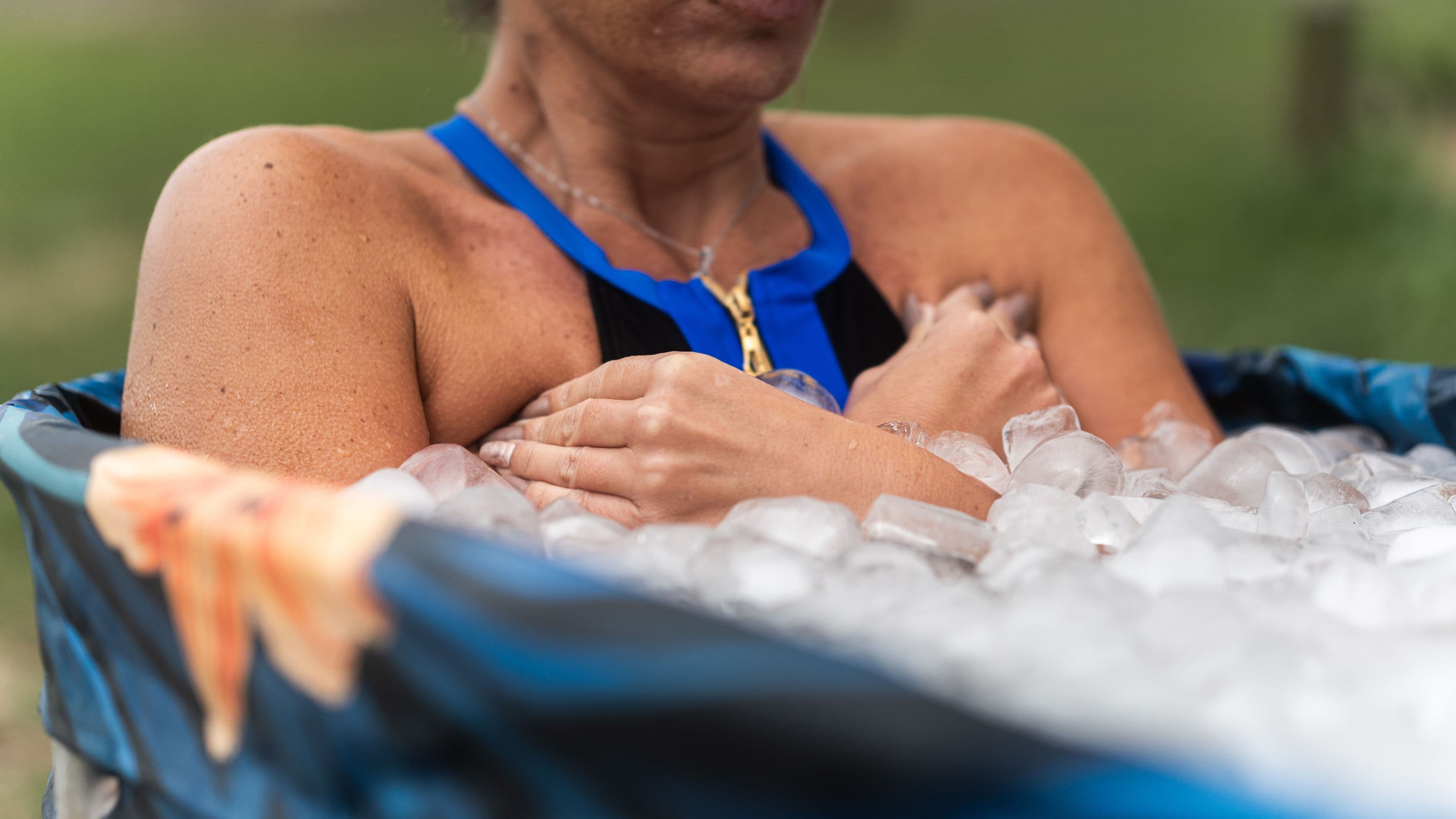
Can HBOT replace other recovery tools like cold plunge or red light therapy? No, and that's not the right framing. These tools operate through different mechanisms and are most effectively used as a stack rather than substitutes. Cold plunge drives vasoconstriction and reduces acute pain; red light therapy supports mitochondrial function at the tissue level; HBOT drives systemic oxygenation and inflammatory resolution. They complement rather than duplicate each other.
Is there any benefit to HBOT for cognitive recovery and sleep? Some data suggests HBOT may support cerebral blood flow and has been explored in the context of traumatic brain injury. For healthy individuals experiencing cognitive fatigue from overtraining or sleep debt, the evidence is limited. It's not the primary application to optimise for.
What should I look for in an HBOT provider? Hard-shell chambers capable of at least 1.5 ATA (ideally 2.0), 100% oxygen delivery, medically supervised intake assessment, and staff who can clearly explain the protocol and safety procedures. If a facility can't tell you the ATA and oxygen purity of their sessions, that's a meaningful red flag.
Is home HBOT equipment worth considering? Hard-shell home chambers exist at significant cost (typically $15,000–$25,000+). Soft-shell home units are far cheaper but, as detailed above, don't deliver the physiological effects associated with meaningful recovery benefits. A hard-shell home unit is a serious capital investment that makes sense only for individuals with very high training volumes and a clear long-term use case.
📚 Sources
Hachmo Y et al. – Hyperbaric oxygen therapy increases telomere length and decreases immunosenescence in isolated blood cells: a prospective trial. Aging. 2020: https://doi.org/10.18632/aging.202188
Babul S et al. – Effects of hyperbaric oxygen on muscle recovery following exercise-induced muscle damage. Journal of Strength and Conditioning Research. 2003: https://journals.lww.com/nsca-jscr/abstract/2003/08000/effects_of_hyperbaric_oxygen_on_exercise_induced.4.aspx
Bennett M et al. – Hyperbaric oxygen therapy for delayed onset muscle soreness and closed soft tissue injury. Cochrane Database Syst Rev. 2005: https://www.cochranelibrary.com/cdsr/doi/10.1002/14651858.CD004713.pub2/full
Staples J, Clement D – Hyperbaric oxygen chambers and the treatment of sports injuries. Sports Medicine. 1996: https://link.springer.com/article/10.2165/00007256-199621010-00004
Thom SR – Hyperbaric oxygen – its mechanisms and efficacy. Plastic and Reconstructive Surgery. 2011: https://journals.lww.com/plasreconsurg/abstract/2011/01000/hyperbaric_oxygen__its_mechanisms_and_efficacy.3.aspx
FDA – Hyperbaric oxygen therapy: Get the facts: https://www.fda.gov/consumers/consumer-updates/hyperbaric-oxygen-therapy-get-facts