
This is one of the more substantiated compounds in the cortisol modulation category, with a clear mode of action, clinical trial data behind it, and a specific protocol that matters for results. Here's what the research actually shows and how to use it correctly.
What Phosphatidylserine Is
Phosphatidylserine (PS) is a phospholipid – a fat molecule with a phosphate group attached – that forms a critical component of cell membranes throughout the body, with especially high concentrations in brain tissue. It's not a foreign compound; it's endogenously produced and obtained from dietary sources, with the richest natural sources being organ meats and, to a lesser extent, white beans and soy. The problem is that modern diets supply a fraction of what the brain uses, and synthesis capacity declines with age.
As a supplement, PS is most commonly derived from soy lecithin (the predominant form since bovine brain-derived PS was phased out due to BSE concerns in the 1990s). The soy-derived form has been shown in clinical trials to be bioavailable and effective, though some researchers note the bovine-sourced compound had a slightly different fatty acid profile. The mechanistic distinction is minor for most applications.
The Mechanism: How PS Blunts Cortisol
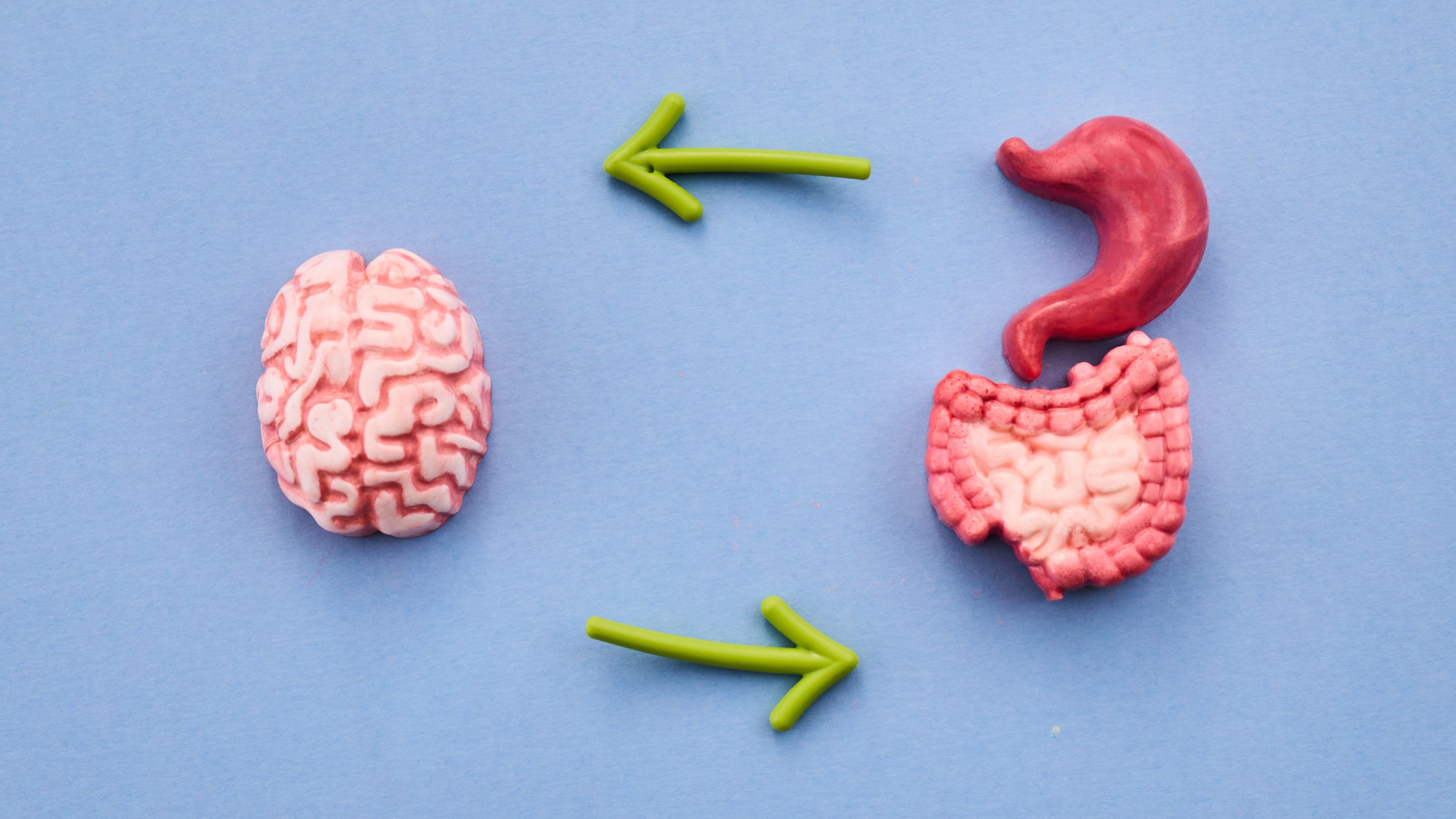
The hypothalamic-pituitary-adrenal (HPA) axis governs cortisol secretion. When a stressor is perceived – physical, psychological, or metabolic – the hypothalamus signals the pituitary to release ACTH (adrenocorticotropic hormone), which then drives the adrenal glands to produce cortisol. PS appears to act upstream in this chain, modulating the HPA axis response before excess cortisol hits circulation.
The specific mechanism involves PS's role in cell signaling at the neuronal level. Phosphatidylserine supports membrane fluidity and receptor function in hippocampal neurons – the same neurons that participate in negative feedback signaling that normally tells the HPA axis to stand down after a stress response. When these neurons are well-supported, the braking system on cortisol secretion functions more effectively. Chronic stress depletes membrane PS, which impairs this feedback loop, which allows cortisol to run higher than necessary. Supplementation restores the substrate the feedback system depends on.
A secondary mechanism involves direct attenuation of ACTH release. Multiple human trials have shown that PS supplementation reduces ACTH response to both physical exercise stress and mental stress protocols, which means less downstream cortisol even when the initial stressor is identical.
What the Research Actually Shows
The clinical literature on PS and cortisol is more robust than most nootropic compounds, though it comes with some important caveats worth knowing.
The landmark early research was conducted by Monteleone et al. in the late 1980s and early 1990s, using intravenous and oral PS administration in healthy men. These studies found significant blunting of ACTH and cortisol responses to physical stress at doses ranging from 400–800mg daily. Critically, these studies used bovine-sourced PS, which differs in fatty acid composition from the soy-derived form now commonly available.
Subsequent research with soy-derived PS has also shown positive outcomes, though generally at slightly higher doses. A study published in the Journal of the International Society of Sports Nutrition found that 600mg/day of soy-derived PS over 10 days significantly reduced post-exercise cortisol in trained men compared to placebo, while also improving perceived well-being. Another trial found that 400mg/day reduced the cortisol response to mental arithmetic stress tests.
The consistent finding across studies is dose-dependency: lower doses (100–200mg) produce modest effects; the range of 400–800mg is where meaningful cortisol modulation has been demonstrated. Importantly, PS does not appear to suppress cortisol indiscriminately – it attenuates the excess stress response without preventing the normal acute cortisol rise needed for performance. That distinction matters for anyone training seriously.
The Protocol
Phase-in and timing: PS is a fat-soluble compound. Take it with a meal containing dietary fat to optimize absorption. Bioavailability is significantly better with food than in a fasted state.
Dosing: Start at 400mg/day for the first two weeks to assess tolerance. For cortisol management in the context of high training volume or chronic psychological stress, 600–800mg/day is the target range supported by research. Doses above 800mg/day have not been shown to provide additional benefit and are unnecessary.
Dosing structure: Split the dose if you're taking 600mg or more. A common protocol is 400mg with the post-workout meal (to blunt the exercise-induced cortisol spike) and an additional 200–400mg with dinner. Taking the second dose with dinner also supports the cortisol decline that should occur in the evening – elevated evening cortisol is a primary driver of disrupted sleep architecture.
Timing relative to training: Post-workout dosing is specifically relevant if cortisol management around exercise is the primary goal. Studies showing blunted exercise cortisol responses have used pre- and post-workout administration. If you train in the morning, take your full dose split between your pre-workout meal and post-workout meal.
Cycle length: PS doesn't require cycling in the traditional sense – there's no receptor downregulation mechanism documented. However, given the cost and the lack of long-term trial data beyond six months, a practical approach is to run 8–12 weeks on, followed by a 2–4 week break to assess baseline before resuming.
Stacking context: PS pairs logically with Ashwagandha (KSM-66 or Sensoril extract), which works through a different mechanism – reducing perceived stress response upstream of HPA axis activation rather than modulating the axis itself. The two are additive rather than redundant. Magnesium glycinate at night addresses a third mechanism: magnesium deficiency is associated with elevated basal cortisol, and most men running hard are not magnesium-sufficient.
Expected Results and Timeline
Subjective effects – reduced perception of stress, improved sleep depth, slightly better mood stability – are typically reported within 2–3 weeks of consistent dosing at 400mg+. Measurable changes in cortisol biomarkers (salivary cortisol testing is the most accessible method) require 4–6 weeks of consistent use to show up reliably, and inter-individual variability is meaningful.
What PS is not going to do: it will not solve a chronically broken lifestyle. If you're sleeping five hours a night, training twice a day, and under significant psychological stress with no management strategy, phosphatidylserine will blunt some of the cortisol load but won't overcome the fundamentals. Think of it as optimizing a system that already has the major variables addressed, not replacing the variables that need addressing.
Testosterone-cortisol ratio is worth tracking if you have baseline labs. Chronic cortisol elevation suppresses LH signaling and reduces testicular testosterone output via direct inhibition of steroidogenesis. Successfully lowering chronic cortisol should reflect positively in this ratio over time, though it won't be the only variable driving it.
Risks and Considerations
PS has a strong safety profile in the published literature. The most commonly reported side effects are gastrointestinal – mild nausea or stomach upset – which are generally dose-dependent and resolve by taking it with food. No serious adverse events have been documented in clinical trials at therapeutic doses.
Two considerations worth flagging:
First, PS has mild anticoagulant properties due to its phospholipid structure and its role in platelet membrane function. This is unlikely to be relevant for healthy men at standard doses, but if you're on prescription anticoagulant therapy, check with your physician before adding PS.
Second, the quality variable in the PS market is significant. PS supplements are frequently underdosed or mislabeled, and some products list PS as part of a proprietary blend without disclosing the actual dose per serving. Given that dose-response is clearly documented in the literature, buying a product where you don't know the actual PS content per dose is not worth the savings. Look for products that list PS concentration explicitly, specify soy-derived phosphatidylserine, and have third-party testing (NSF Certified for Sport or Informed Sport are the benchmarks if you're subject to drug testing).
Mistakes to Avoid
Underdosing is the most common failure mode. Many commercially available PS products deliver 100mg per serving – a dose that shows up in the literature as insufficient for meaningful cortisol modulation. If you're not hitting 400mg minimum, you're not running a cortisol management protocol, you're spending money on a compound that probably won't move the needle.
Taking PS in isolation while ignoring sleep is a waste. Cortisol and sleep are bidirectionally linked: elevated cortisol disrupts sleep architecture, and insufficient sleep elevates cortisol the following day. PS can help with both directions, but it can't compensate for consistently inadequate sleep. Address sleep first.
Expecting results in a week. The studies showing significant cortisol modulation used 10-day to multi-week protocols. One-week trials have not demonstrated the same effect size. Patience and consistency are required.
FAQ
Does phosphatidylserine lower cortisol or just blunt the response to stress? Both, to a degree. Research shows reduced ACTH output in response to acute stressors, which means lower cortisol spikes under stress. There's also evidence of reduced basal cortisol over extended supplementation periods, though the effect size on basal levels is smaller than the effect on stress-reactive cortisol.
Can I use PS to reduce cortisol from overtraining? Yes, and this is one of the more evidence-supported applications. Several trials specifically looked at overreaching athletes and found meaningful cortisol attenuation with PS supplementation. If you're in a high-volume training block, PS is a rational addition. It doesn't fix overtraining – only appropriate load management does that – but it can reduce some of the hormonal cost during planned high-volume phases.
Does PS affect testosterone directly? Not directly. PS doesn't interact with androgen receptors or the testosterone synthesis pathway. The benefit to testosterone comes indirectly: by reducing cortisol, you reduce one of the primary suppressors of LH signaling and testicular steroidogenesis. Less cortisol – better T-to-C ratio.
Is the soy-derived form as effective as the bovine-derived form? The clinical evidence for soy-derived PS on cortisol is positive but draws from a smaller trial base than bovine-sourced PS. The mechanistic rationale for effectiveness is the same – PS content and bioavailability are comparable. For practical purposes, soy-derived is the only viable option available, and the evidence supports its use.
Should I test cortisol before starting a PS protocol? It's not required, but it's useful. DUTCH testing (Dried Urine Test for Comprehensive Hormones) gives you a full-day cortisol curve including free cortisol and cortisol metabolites, which tells you whether you're dealing with high total output, poor clearance, or a specific timing issue (e.g., elevated evening cortisol specifically). That information helps you optimize the timing of your PS dosing. Salivary cortisol at-home tests are a more accessible and affordable alternative if DUTCH isn't feasible.
📚 Sources
Monteleone P et al. – Blunting by chronic phosphatidylserine administration of the stress-induced activation of the hypothalamo-pituitary-adrenal axis in healthy men – pubmed.ncbi.nlm.nih.gov/2170725
Starks MA et al. – The effects of phosphatidylserine on endocrine response to moderate intensity exercise – pubmed.ncbi.nlm.nih.gov/18662806
Hellhammer J et al. – Effects of soy lecithin phosphatidic acid and phosphatidylserine complex on stress – pubmed.ncbi.nlm.nih.gov/15322754
Examines.com – Phosphatidylserine Research Summary – examine.com/supplements/phosphatidylserine
Coiro V et al. – Phosphatidylserine counteracts physiological and pharmacological activators of the hypothalamo-pituitary-adrenocortical axis in normal humans – pubmed.ncbi.nlm.nih.gov/8257717
Kidd PM – Phosphatidylserine: membrane nutrient for memory – a clinical and mechanistic assessment – pubmed.ncbi.nlm.nih.gov/10228012