
This comparison breaks down the mechanisms, the evidence, the costs, and the specific use cases where each tool wins – so you can build a recovery stack based on actual ROI, not marketing.
Mechanism Overview: How Each Tool Works
Understanding what each modality actually does at the physiological level is the prerequisite for making a rational comparison. They are not interchangeable – they target different aspects of recovery through different mechanisms.
Percussion Therapy works via rapid, high-amplitude mechanical pulses delivered deep into soft tissue – typically 1,200–3,200 percussions per minute at 8–16mm of amplitude depending on the device and attachment. The primary mechanisms are threefold. First, the percussive force stimulates mechanoreceptors in muscle and fascia, triggering a neurological response that acutely reduces muscle tension via the inverse myotatic reflex. Second, the mechanical agitation increases local blood flow and interstitial fluid movement, accelerating metabolite clearance from worked tissue. Third, consistent pressure application disrupts adhesions in fascia and promotes tissue extensibility, which affects range of motion and movement quality. The net acute effect is reduced perceived soreness, improved local circulation, and decreased neuromuscular stiffness.
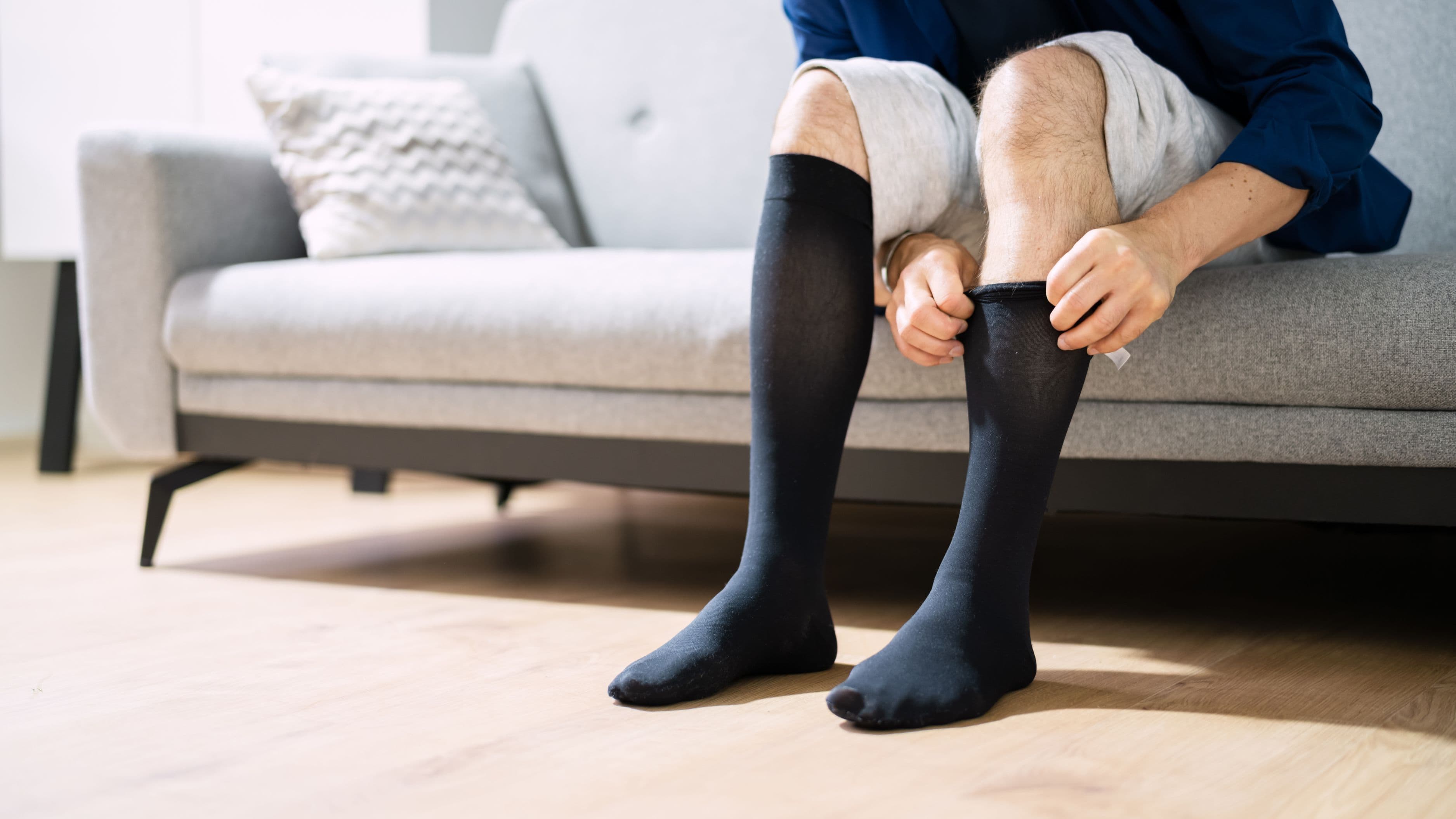
Pneumatic Compression Boots work through a fundamentally different mechanism: sequential, gradient pneumatic compression applied from distal to proximal – typically foot to hip in lower limb systems. The inflation-deflation cycles mechanically augment venous return and lymphatic drainage, pushing blood and metabolic waste products (lactate, inflammatory cytokines, creatine kinase) out of the lower extremity tissue and back into systemic circulation for clearance. The peristaltic pumping action mirrors the function of muscular contraction in driving venous return, which is why the effect is particularly pronounced post-training when legs are fatigued and passive venous return is reduced. Some systems also include a pressure hold phase that applies sustained compression, which has been shown to reduce edema in post-exercise lower limb tissue.
The fundamental difference: percussion therapy acts locally at the neuromuscular and fascial level, while compression boots act systemically on the circulatory and lymphatic level. Both produce measurable recovery effects, but the physiology is distinct.
The Evidence: What the Research Actually Shows
For Percussion Therapy:
The research on percussion devices specifically (as opposed to vibration therapy broadly) has expanded significantly since Theragun's market entry. A 2021 study by Konrad et al. in the Journal of Clinical Medicine found that a single 5-minute application of a percussion device to the calf significantly increased range of motion and reduced passive resistive torque without decreasing maximal force production – a finding that distinguishes it from static stretching, which can acutely reduce strength output. A 2020 randomized trial by Kargarfard et al. in the Journal of Sports Science & Medicine found that percussion device application over 72 hours post-training significantly reduced DOMS and improved muscle performance recovery compared to passive rest in trained males. Effect sizes in the percussion literature tend to be moderate – the intervention consistently outperforms passive rest but doesn't dramatically outperform other active recovery modalities like foam rolling in direct comparisons.
Where percussion pulls ahead in the evidence base is acute neuromuscular readiness – the data supporting improved range of motion, reduced stiffness, and maintained force production during or immediately before training is more consistent than comparable data for compression boots in the pre-training context.
For Compression Boots:
The compression boot literature has a longer track record, with pneumatic compression devices used in clinical settings (post-surgical edema management, DVT prevention) for decades before their adoption in athletic recovery. A 2015 meta-analysis by Cochrane et al. in the British Journal of Sports Medicine, covering 23 trials of compression garments and devices, found consistent evidence for reduced DOMS and improved recovery of muscle function following exercise, with stronger effects seen for active pneumatic systems compared to passive compression garments. A 2013 study by Sands et al. in the Journal of Strength and Conditioning Research found that pneumatic compression significantly reduced perceived fatigue and soreness in high-level athletes during intensified training blocks compared to passive rest. The effect on lactate clearance is particularly well-documented: pneumatic compression post-exercise accelerates blood lactate return to baseline compared to passive recovery in multiple controlled trials.
The compression boot evidence base is particularly strong for high-volume, multi-day training scenarios – situations where accumulated lower limb fatigue and incomplete venous clearance are the primary rate-limiters on recovery speed.
Cost Analysis: Real Numbers
Percussion Devices:
The functional range spans from $150 (budget tier, limited amplitude and stall force) to $600 (Theragun Pro, Hyperice Hypervolt Pro, with full amplitude, multiple speed settings, and attachment variety). The $300–$400 mid-tier includes devices like the Theragun Prime and Hyperice Hypervolt 2 that cover the majority of use cases without the professional-tier pricing. One-time purchase, no consumables, no ongoing cost. A quality percussion device purchased at $350 with consistent use over 3 years works out to roughly $0.25–0.50 per session at daily use.
Pneumatic Compression Boots:
Consumer-grade systems from NormaTec (now owned by Hyperice), Air Relax, and Rapid Reboot range from $500 (entry-level single-zone systems) to $1,500+ (NormaTec 3.0 full leg with hip attachment). NormaTec's Pulse 2.0 legs, the market standard that most serious users reference, typically run $700–$900. These are also one-time purchases with no consumables. At $800 and daily use over 3 years, the per-session cost is approximately $0.70–1.00. The premium for compression boots relative to percussion devices is real and primarily reflects the more complex hardware – the pneumatic pump, tubing system, and multi-chamber sleeves add cost that consumer-grade motors in percussion devices don't carry.
ROI frame: If budget requires choosing one, the percussion device provides more versatile whole-body coverage at a lower price point. The compression boots deliver superior circulatory recovery for the lower body specifically but at a higher cost for a more targeted application.
Head-to-Head: Recovery Context by Context
Post-Leg Day / Lower Body Volume Work: Compression boots are the stronger tool here. The mechanism directly addresses the primary rate-limiter in lower body recovery – inadequate venous return in fatigued lower limbs loaded with metabolic waste. 20–30 minutes in compression boots post-training has a measurable effect on lactate clearance and next-day soreness that percussion applied to the same region doesn't match on a direct comparison basis. If you train legs hard and frequently, this is where the compression boot ROI is highest.
Post-Upper Body Training / General Soreness: Percussion wins by default on versatility. Compression boot sleeves are designed for lower extremities – the hip attachments help but upper body application isn't practical with standard systems. For thoracic, lat, trap, or shoulder soreness, a percussion device with appropriate attachments covers the territory with direct mechanism relevance. For athletes with significant upper body training volume – powerlifters, Olympic lifters, wrestlers, gymnasts – a percussion device may be more broadly useful than compression boots.
Pre-Training Warm-Up and Activation: Percussion is clearly the tool for pre-session application. The acute ROM improvement, neuromuscular stiffness reduction, and maintained force production findings apply directly to pre-training prep. 5–10 minutes of targeted percussion to working muscles before a session has a well-supported acute benefit. Compression boots have no established pre-training benefit and are contraindicated before activities requiring maximal neuromuscular output, as passive circulatory augmentation doesn't prep the neuromuscular system for high-intensity effort.
Multi-Day Tournament or Competition Block: Compression boots are the priority here. When you're competing or training at high intensity on consecutive days and the primary limiting factor is cumulative lower limb fatigue and incomplete recovery, the circulatory mechanism of compression boots addresses the exact physiological bottleneck. Elite endurance athletes, basketball players, soccer players, and combat sports competitors dealing with daily or near-daily high output use compression boots for precisely this reason.
Travel and Portability: Percussion devices are considerably more portable. Modern percussion devices weigh under 2kg and fit in carry-on luggage. Compression boot systems require the pump unit plus the boot sleeves, are substantially heavier, and require a power outlet. For athletes who travel frequently and want to maintain recovery protocols on the road, a percussion device is the only practical option.
Protocol: Using Both Effectively
If you have both tools, the optimal deployment is sequential rather than redundant:
Post-Training Protocol (Lower Body Focus): Begin with 10–15 minutes of percussion to the worked lower body muscles at medium amplitude – this acute metabolite dispersal and tissue prep enhances the subsequent compression response by ensuring tissue is not in a contracted, ischemic state before compression begins. Follow with 20–30 minutes of compression boots at moderate pressure (60–80 mmHg for most users). The combination produces better lactate clearance and DOMS reduction than either modality alone in the limited head-to-head combination trial data available.
Pre-Training Protocol: 5–10 minutes of percussion to the target muscle groups only. No compression boots pre-training.
Active Recovery Day: Either modality in isolation is appropriate. 20–30 minutes of compression boots for passive recovery with zero energy expenditure, or a 15-minute percussion session targeting specific areas of residual soreness.
Limitations and What Neither Tool Does
Neither percussion devices nor compression boots replace the primary drivers of recovery: sleep quality, caloric sufficiency, protein intake, and intelligent programming. Both tools accelerate recovery within the window created by adequate foundational recovery – they do not compensate for chronic sleep deficits, caloric restriction, or training volume that exceeds recovery capacity.
Percussion devices, applied too aggressively or over acute injury, can worsen inflammation. The standard contraindication applies: avoid percussion directly over acute injuries, bruising, bony prominences, varicose veins, and inflamed joints. The common mistake is treating percussion like soft tissue work from a sports massage therapist and applying excessive pressure over sensitive areas.
Compression boots are contraindicated for individuals with peripheral arterial disease, acute DVT or thrombosis risk, open wounds on the lower extremities, and certain cardiac conditions. For healthy trained males with no vascular pathology, the risk profile is minimal at consumer pressure ranges. If you're uncertain, the conservative approach is to confirm there are no contraindications with your physician before using compression systems.
The Verdict
Buy a percussion device first if you're choosing one. The versatility across the full body, the pre-training utility, the portability, the lower cost, and the broad evidence base for soft tissue recovery make it the higher-ROI single tool for most training profiles.
Add compression boots if your training volume is predominantly lower body, if you compete or train on consecutive days with regularity, or if your budget allows for both. The circulatory and lymphatic mechanism is genuinely distinct from what percussion delivers, and for lower limb recovery specifically – particularly post-training in endurance, team sport, or high-volume strength athletes – the investment is justified.
Used together with a structured protocol, the two tools address different physiological bottlenecks and the combined stack is greater than the sum of its parts. But if you're forced to prioritize, start with the percussion device and add compression once the budget allows and the training context justifies it.
FAQ
Can I use both in the same session? Yes – and there's limited trial data supporting a sequential protocol (percussion first, then compression) producing better acute outcomes than either alone. The logical sequence is percussion to mobilize tissue and clear surface metabolites, followed by compression to drive systemic clearance via venous and lymphatic augmentation.
How long should a compression boot session be? 20–30 minutes at 60–80 mmHg covers the effective range for most post-training recovery purposes. Sessions shorter than 15 minutes show reduced effect on lactate clearance. Sessions beyond 30–40 minutes produce diminishing returns for acute recovery purposes, though longer sessions have been used in clinical edema management.
What percussion device stall force should I look for? For muscle recovery applications in trained individuals, a stall force of at least 30–40 lbs is the functional minimum. Below that threshold, the device stalls under firm tissue contact and the depth of percussion is compromised. Consumer devices in the $300+ range generally exceed this. Budget devices under $150 often fall short.
Do compression boots help with upper body recovery? Not directly. The sleeves cover the lower extremities only in standard configurations. The systemic effects of improved venous return and reduced inflammatory load from post-training lower body application may produce some indirect whole-body recovery benefit, but this is speculative. For upper body recovery, percussion remains the appropriate tool.
Is there a meaningful difference between NormaTec and budget compression systems? Yes, primarily in the pressure control precision, the peristaltic pulse pattern, and build quality. NormaTec's patented pulse technology uses a hold-and-release compression sequence that better mimics natural muscle pump physiology compared to basic inflate-deflate cycling in budget systems. For casual recovery use, budget systems are functional. For high-volume athletes using the tool daily or near-daily, the NormaTec pressure precision and sleeve durability justify the price premium.
Wrapping Up
Percussion therapy and compression boots are both legitimate recovery tools with distinct mechanisms, distinct evidence bases, and distinct best-use contexts. They're not competing for the same physiological territory – one is a neuromuscular and fascial tool, the other is a circulatory and lymphatic tool. Understanding that distinction is the whole framework for making a smart purchase decision and deploying both effectively.
Percussion first, compression second. Use them sequentially when you have both. Invest in hardware quality in both categories – the budget tier underperforms in ways that matter for trained users. And neither replaces sleep.
📚 Sources
Percussion device effects on range of motion and passive resistive torque – Konrad et al., Journal of Clinical Medicine, 2021: https://pubmed.ncbi.nlm.nih.gov/33668814/
Percussion therapy and DOMS reduction – Kargarfard et al., Journal of Sports Science & Medicine, 2021: https://www.ncbi.nlm.nih.gov/pmc/articles/PMC7987525/
Compression garments meta-analysis and DOMS – Cochrane et al., British Journal of Sports Medicine, 2015: https://pubmed.ncbi.nlm.nih.gov/24803947/
Pneumatic compression and recovery in high-level athletes – Sands et al., Journal of Strength and Conditioning Research, 2013: https://pubmed.ncbi.nlm.nih.gov/23558371/
Sequential compression and venous return physiology – Malone et al., Journal of Vascular Surgery, 1999: https://pubmed.ncbi.nlm.nih.gov/10415405/
Vibration and percussion therapy mechanisms review – Cheatham et al., Journal of Sport Rehabilitation, 2020: https://pubmed.ncbi.nlm.nih.gov/31203201/