
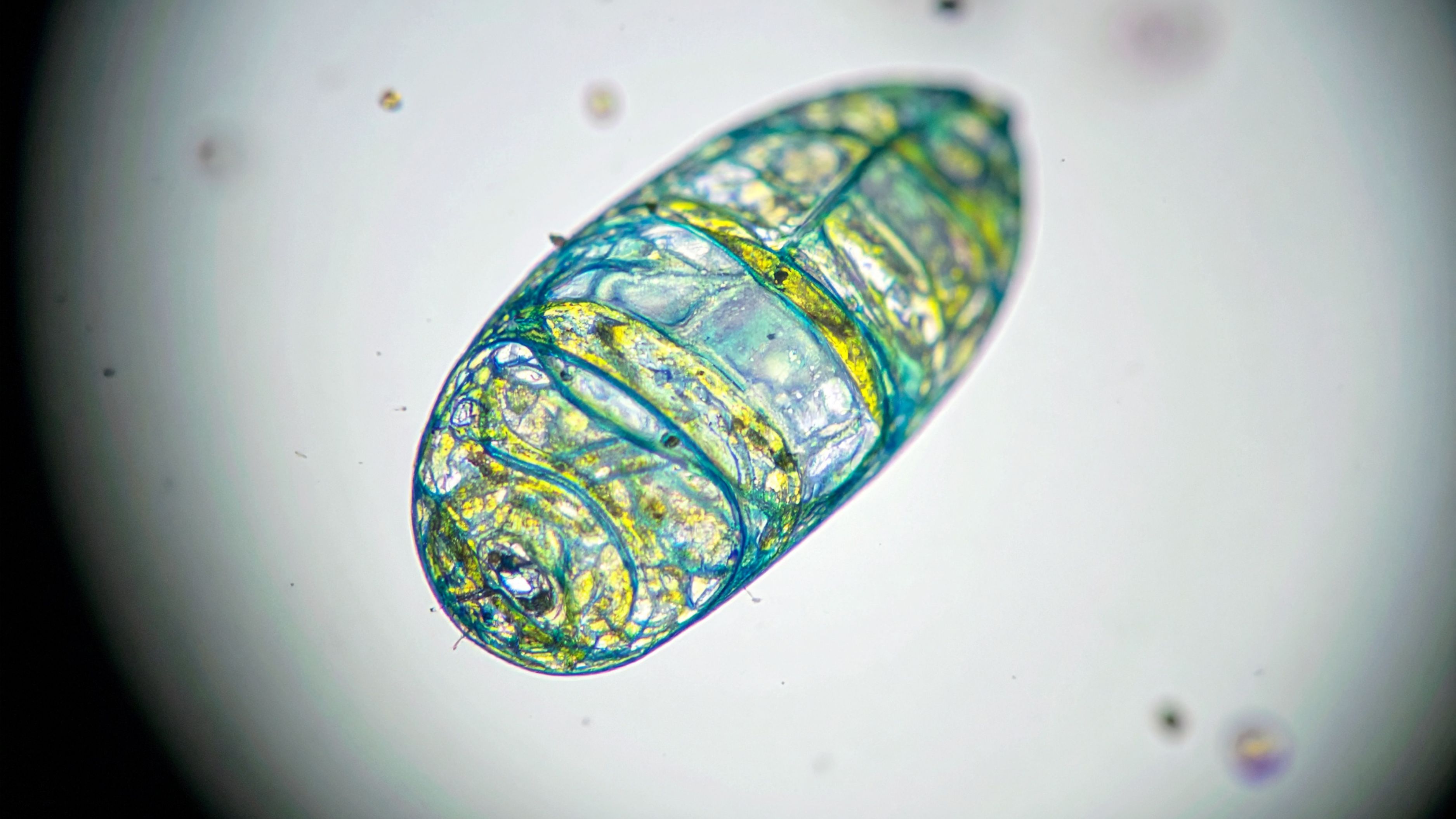
The short answer: yes, methylene blue has real, documented effects on mitochondrial function. The longer answer involves dose dependency, context specificity, significant unknowns at the dosing levels being used in self-experimentation, and a body of research that is more complicated than most biohacking content acknowledges.
What Methylene Blue Is
Methylene blue (MB) is a synthetic thiazine dye first synthesized in 1876. Its initial applications were industrial and histological – used for staining tissue in microscopy and later as the first synthetic drug used in medicine, as a treatment for malaria and methemoglobinemia. It is still FDA-approved today for the treatment of drug-induced methemoglobinemia, where it acts as an electron carrier to reduce the oxidized hemoglobin that can't carry oxygen.
That electron-carrying capacity is precisely why it has attracted attention in the context of mitochondrial optimization. Methylene blue can accept and donate electrons within the mitochondrial electron transport chain (ETC), which is the mechanism through which its performance-relevant effects are proposed to operate. Understanding that mechanism requires a brief look at how the ETC works and where MB fits into it.
The Mitochondrial Electron Transport Chain – What You Need to Know
The ETC is the final stage of cellular respiration. Located in the inner mitochondrial membrane, it consists of four protein complexes (Complex I through IV) and two mobile electron carriers – coenzyme Q10 (ubiquinol/ubiquinone) and cytochrome c. Electrons derived from NADH and FADH2 pass sequentially through these complexes, with each transfer releasing energy used to pump protons across the inner membrane. That proton gradient drives ATP synthase (Complex V) to produce ATP – the cell's primary energy currency.
The process is efficient but not perfect. Electrons occasionally leak from the chain, particularly at Complexes I and III, and react with oxygen to form reactive oxygen species (ROS). At low levels, ROS serve as signaling molecules. At elevated levels – from metabolic stress, aging, or mitochondrial dysfunction – they cause oxidative damage to lipids, proteins, and mitochondrial DNA, contributing to cellular dysfunction and accelerated aging.
This is the context in which methylene blue's mechanism becomes meaningful.
How Methylene Blue Interacts With the ETC
Methylene blue can function as an alternative electron carrier, accepting electrons from NADH at Complex I and donating them directly to cytochrome c, effectively bypassing Complexes I, II, and III. This bypass has several proposed consequences.
First, it maintains electron flow when the standard pathway is impaired – relevant in conditions where Complex I or III dysfunction creates a bottleneck. Second, it reduces electron leak at those complexes by intercepting electrons before they have the opportunity to form superoxide radicals. Third, it supports ATP production by keeping the electron flow to Complex IV and cytochrome oxidase active.
The net effect in a dysfunctional or stressed mitochondrion is a reduction in ROS production, maintenance of the mitochondrial membrane potential, and continued ATP synthesis under conditions that would otherwise compromise it. In healthy mitochondria operating at full capacity, the picture is more nuanced – MB's electron bypass may be less relevant when the primary pathway isn't congested, and at higher concentrations, MB itself acts as a pro-oxidant.
This dose dependency is critical and frequently overlooked in biohacking discussions. The research consistently shows a hormetic response curve: low doses of MB appear to support mitochondrial function and reduce oxidative stress; higher doses paradoxically increase ROS generation. The threshold between benefit and harm is not uniformly established and appears to vary by cell type, species, and individual metabolic context.
What the Research Actually Shows
The evidence for methylene blue's effects on mitochondrial function comes primarily from in vitro studies, animal models, and a smaller body of human clinical data – predominantly in neurological and aging contexts.
In vitro work has consistently demonstrated MB's ability to increase oxygen consumption in isolated mitochondria, enhance cytochrome c oxidase (Complex IV) activity, and reduce ROS production at low concentrations. A study published in Neurochemical Research showed MB increased mitochondrial complex activity in rat brain mitochondria and demonstrated cytoprotective effects under oxidative stress conditions. These findings are mechanistically sound and have been replicated across multiple cell types.
Animal research extends this into cognitive performance. A 2011 study in Neuropsychopharmacology found that MB at low doses (0.5–4 mg/kg) improved memory consolidation and retrieval in rats, with the effect mediated through increased cytochrome oxidase activity in hippocampal and cortical neurons. Importantly, the U-shaped dose response appeared here as well – memory enhancement peaked at low doses and declined at higher doses, consistent with the pro-oxidant shift at elevated concentrations.
Human research is more limited but not absent. A 2016 study in Redox Biology demonstrated that low-dose MB improved sustained attention and short-term memory in healthy adults, with associated increases in fMRI-measured cerebral metabolic activity. This is meaningful because it connects the mitochondrial mechanism to an observable cognitive outcome in humans – not just rodents. The doses used in the human research were in the low range: 0.5–4 mg/kg body weight, which for a 180 lb (82 kg) man translates to roughly 40–330 mg, with the performance-relevant effects appearing at the lower end of that range.
The clinical data supporting MB in neurodegeneration and cognitive decline contexts is more robust, with research into Alzheimer's disease and traumatic brain injury showing mitochondrial support and neuroprotective effects. These are pathological contexts, however, and extrapolating them directly to a healthy high-performer looking to optimize is a leap the research doesn't fully support.
Cognitive Performance Claims – Separating Signal From Noise
The biohacking community has elevated MB primarily for cognitive enhancement: improved focus, faster mental processing, better memory consolidation. Some of these claims have mechanistic support. Most of the dosing protocols circulating online do not align with the doses used in the supporting research.
The cognitive effects with the strongest mechanistic grounding are those mediated through Complex IV upregulation in neurons with high metabolic demand – particularly in the prefrontal cortex and hippocampus, which are among the most energetically expensive brain regions. When mitochondrial function in these areas is supported, cognitive performance under sustained demand appears to improve. The 2016 Redox Biology human study is the most direct evidence for this in healthy subjects.
Where the claims diverge from the data: many self-experimenters are dosing at 10–50 mg or higher in a single dose, which is above the range where the cognitive benefit data was generated and potentially within the range of the pro-oxidant threshold depending on individual metabolism. At these doses, MB can also inhibit monoamine oxidase (MAO), which has antidepressant-relevant effects but introduces additional pharmacological complexity and drug interaction risk. This is not a trivial consideration.
Risks, Interactions, and What to Watch For
Methylene blue is not a benign supplement with no downside profile. Several risk factors are worth taking seriously.
Serotonin syndrome is the most acute risk. MB is a potent MAO inhibitor at higher doses. Combined with SSRIs, SNRIs, tramadol, linezolid, or other serotonergic drugs, it can produce life-threatening serotonin toxicity. This interaction is documented in clinical literature and has caused fatalities in patients who received IV MB intraoperatively while on serotonergic medications. If you are taking any serotonergic drug, methylene blue is contraindicated.
G6PD deficiency is another contraindication. MB works by facilitating electron transfer through a reaction that depends on NADPH generated by G6PD. In individuals with G6PD deficiency – an X-linked genetic variant common in populations of African, Mediterranean, and Southeast Asian descent – MB can precipitate hemolytic anemia. G6PD status is testable and worth confirming before use.
At doses above roughly 7 mg/kg, MB begins to produce methemoglobin rather than reducing it – the opposite of its FDA-approved use. This is the paradoxical pro-oxidant effect manifesting at the hematological level. The self-experimentation dosing range used by many in the biohacking community is below this threshold, but it underscores the importance of dose discipline.
Cosmetic note with practical relevance: MB is a dye. It will turn urine, saliva, and occasionally skin blue at effective doses. This is harmless but worth knowing before you use it.
Practical Application – If You Choose to Use It
If you've reviewed the above and want to run a controlled trial, here is what the evidence supports.
Dose range with the most defensible evidence: 0.5–2 mg/kg body weight. For most men, this is 40–160 mg per day. Start at the lower end – 0.5 mg/kg – and hold there for at least 3–4 weeks before adjusting. The data does not support higher doses for cognitive performance and the risk profile increases above this range without corresponding evidence of greater benefit.
Pharmaceutical-grade USP is the only form worth using. Industrial grade MB contains impurities including heavy metals and is not suitable for human consumption regardless of what some vendors claim. Verify purity from the supplier before purchasing.
Timing: some evidence suggests morning dosing aligns better with the intended cognitive performance window and avoids any potential interference with sleep architecture. MB has been shown to affect nitric oxide levels and monoamine metabolism, both of which have downstream circadian implications.
Cycling matters. Chronic daily use without breaks has not been studied at the doses and durations relevant to self-experimentation. A reasonable approach based on available evidence and precautionary principle is 5 days on / 2 days off, or 4 weeks on / 1 week off, with HRV and subjective cognitive performance as your tracking variables.
Track your data. Compare HRV trend, subjective focus scores, and sleep quality on MB versus off it over a minimum 6-week trial. If the data shows improvement, you have individual confirmation. If it shows no change or degradation, you have evidence to discontinue – not a reason to increase the dose.
The Bottom Line
Methylene blue has a legitimate mechanistic case for mitochondrial support and real evidence of cognitive benefit in both animal and limited human research. The effect is real. The hype around it is outpacing the evidence, the dosing in most self-experimentation protocols is above the evidence-supported range, and the risk profile – particularly serotonin syndrome risk – is non-trivial and frequently understated.
For a healthy man with no serotonergic medications, no G6PD deficiency, and a disciplined approach to dose and tracking, a controlled low-dose MB trial is a reasonable experiment with a real mechanistic basis. Treat it like what it is: a pharmacologically active compound with dose-dependent effects in both directions, not a supplement to stack casually alongside your morning coffee.
FAQ
What is the best dose of methylene blue for cognitive performance? The human research supporting cognitive enhancement used doses in the 0.5–4 mg/kg range, with effects most pronounced at the lower end. For most men, 0.5–1 mg/kg (roughly 40–80 mg for a 180 lb man) is the evidence-supported starting point. There is no data supporting higher doses for cognitive benefit, and the pro-oxidant threshold rises as dose increases.
Can I take methylene blue with other supplements? Most non-serotonergic supplements are not problematic at low doses. The critical interactions are with serotonergic compounds – SSRIs, SNRIs, 5-HTP, St. John's Wort, tramadol, and some nootropics that affect serotonin. This is a hard contraindication, not a "use caution" situation. Verify everything you're taking before introducing MB.
How quickly should I expect effects? Acute effects on focus and cognitive clarity are reported by many users within hours of the first dose, likely reflecting the immediate Complex IV upregulation mechanism. Longer-term mitochondrial adaptation effects – measurable in HRV and sustained energy – take 3–4 weeks to assess meaningfully.
Is pharmaceutical-grade MB significantly different from lower-quality products? Yes, materially. Industrial-grade methylene blue is synthesized for non-biological purposes and contains impurities – zinc, arsenic, and other heavy metals – that make it unsuitable for consumption. Only USP pharmaceutical-grade or equivalent purity from a reputable supplier should be used for oral administration.
Does methylene blue interact with red light therapy or other mitochondrial protocols? Red light therapy (photobiomodulation) acts on cytochrome c oxidase directly through photon absorption, increasing enzyme activity through a different mechanism than MB's electron carrier function. They are not redundant and do not appear to interfere with each other. Some researchers have speculated about additive effects, but that specific combination has not been studied in controlled trials. Using both is unlikely to be harmful at evidence-based doses, but additive benefit remains unconfirmed.
📚 Sources
Rojas J.C. et al. – Neurological and psychological applications of transcranial lasers and LEDs. Biochem Pharmacol, 2013: https://pubmed.ncbi.nlm.nih.gov/23567289/
Wrubel K.M. et al. – Methylene blue improves memory in rats by acting as a metabolic and antioxidant enhancer. Neuropsychopharmacology, 2011: https://pubmed.ncbi.nlm.nih.gov/21068720/
Gonzalez-Lima F. et al. – Methylene blue improves brain oxidative metabolism and memory retention in rats. Pharmacol Biochem Behav, 1994: https://pubmed.ncbi.nlm.nih.gov/7816864/
Talbot S. et al. – Methylene blue reduces ROS and improves mitochondrial function in isolated brain mitochondria. Neurochem Res, 2008: https://pubmed.ncbi.nlm.nih.gov/17952580/
Bhurtel S. et al. – Methylene blue protects dopaminergic neurons in MPTP model of Parkinson's disease. Ann N Y Acad Sci, 2019: https://pubmed.ncbi.nlm.nih.gov/30726581/
Stanford S.C. et al. – Risk of severe serotonin toxicity following co-administration of methylene blue and serotonergic drugs. J Psychopharmacol, 2010: https://pubmed.ncbi.nlm.nih.gov/19822613/