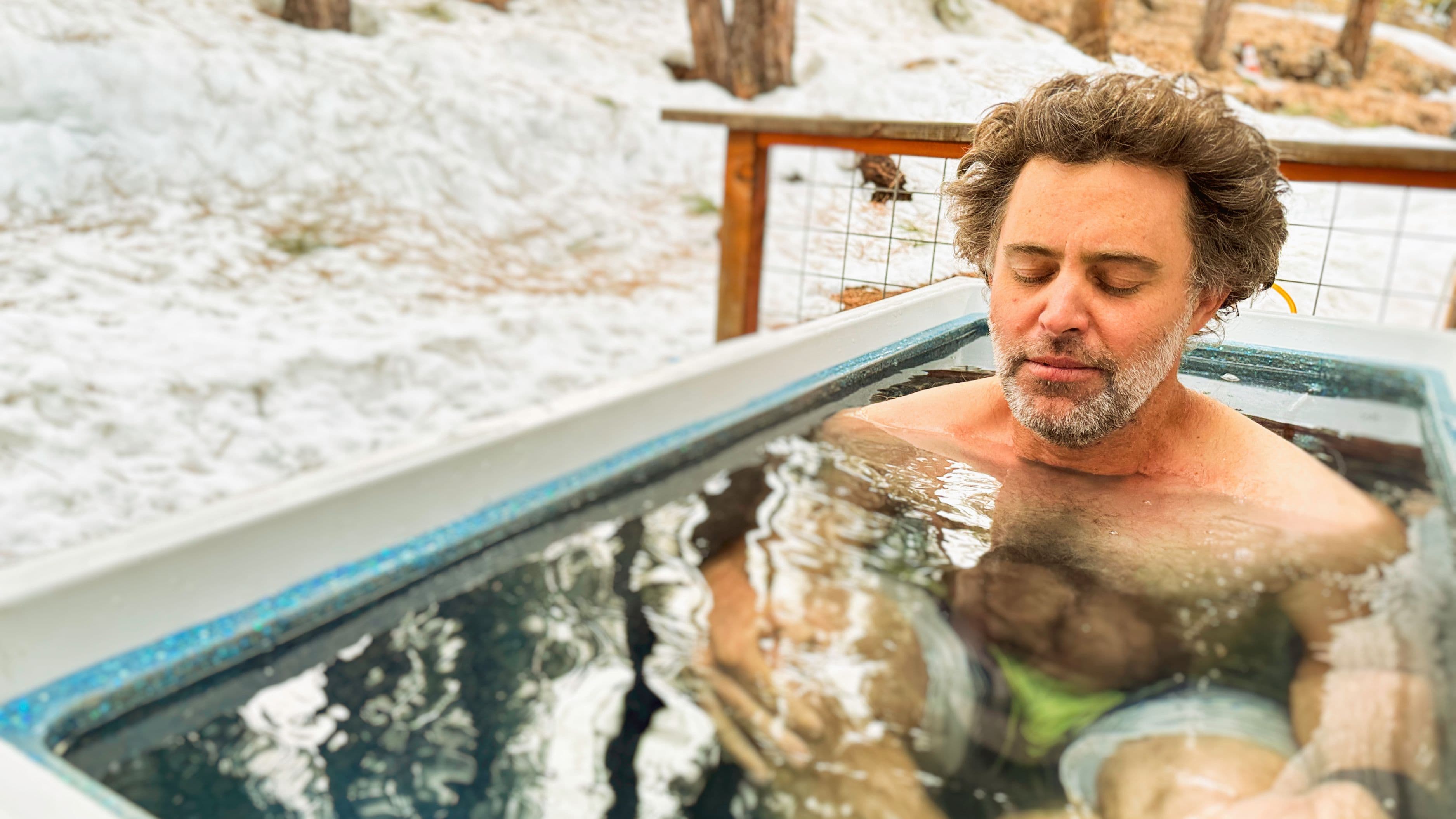

For strength and hypertrophy training, however, the evidence runs in the opposite direction. If your goal is building muscle — and doing it efficiently — ice baths taken immediately post-training are not a recovery tool. They're a partial erasure of the work you just did.
Here's the mechanism, the evidence, and what to use instead.
The Inflammation Misunderstanding
The foundational problem with post-strength CWI is that it treats acute inflammation as a problem to be solved. It isn't. Acute post-exercise inflammation is a required signal in the hypertrophic cascade — not a side effect of training, but a core part of the adaptation process.
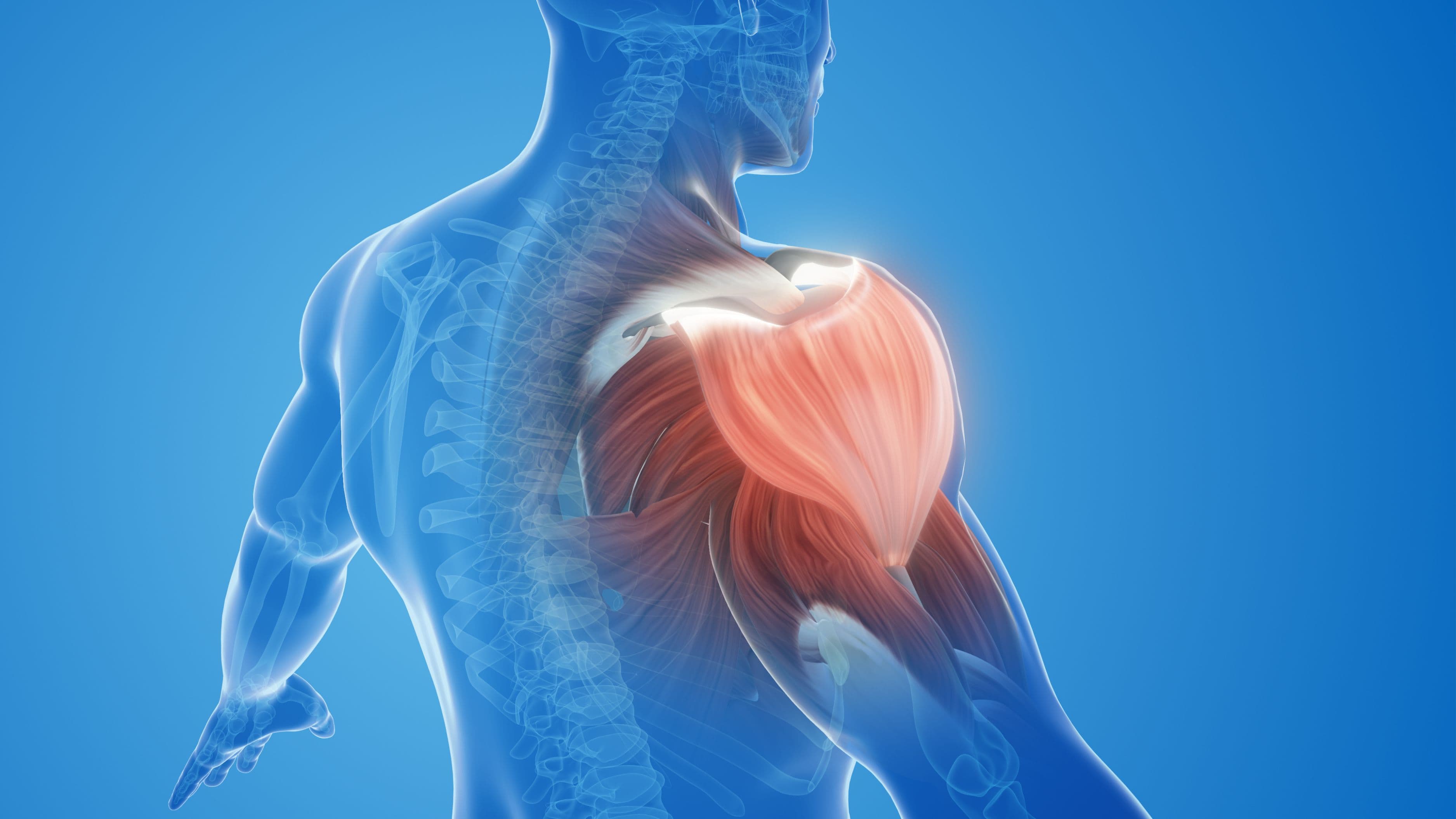
When you apply sufficient mechanical load to muscle fibers, you generate microtrauma. The inflammatory response that follows — characterized by neutrophil and macrophage infiltration, prostaglandin release, and cytokine signaling — is what initiates satellite cell activation and the protein synthesis cascade that leads to muscle repair and growth. Blunting this response with cold doesn't accelerate recovery. It interrupts the signal before the adaptation can complete.
This distinction matters enormously. The soreness you're trying to reduce isn't waste — it's a marker of the stimulus that's going to drive your adaptation. Eliminating it prematurely doesn't mean the adaptation is bypassed cleanly. It means the signal was cut before it finished its job.
What the Research Shows
The most important work in this area comes from a series of studies by Roberts et al., published in the Journal of Physiology in 2015. This was a randomized controlled trial comparing post-training cold water immersion (10 minutes at 10°C) against active recovery (low-intensity cycling) over 12 weeks of strength training. The CWI group showed significantly reduced gains in muscle strength and size compared to the active recovery group — not a marginal trend, a statistically significant difference in actual hypertrophy outcomes.
The same research group followed with muscle biopsies that revealed the mechanism directly: CWI attenuated the post-exercise activation of mTORC1 — the master regulator of muscle protein synthesis — and reduced satellite cell activity. These aren't peripheral markers. mTORC1 signaling is the central molecular switch that determines whether your training session produces adaptation or not. Suppressing it post-training is a direct interference with the adaptive machinery.
A 2019 meta-analysis by Malta et al. in the European Journal of Sport Science reviewed 13 studies on CWI and resistance training outcomes and confirmed the pattern: CWI consistently blunted hypertrophy and strength development compared to passive or active recovery controls. The effect was most pronounced when CWI was applied immediately post-training — within the critical window when mTOR signaling, satellite cell activity, and inflammatory signaling are at their peak.
A 2021 review in Sports Medicine by Broatch et al. further characterized the timing sensitivity: the closer to the training session, the greater the interference. CWI applied 4+ hours post-training appeared to have minimal negative impact on adaptation; CWI applied within 1 hour post-training produced meaningful suppression.
The mTORC1 and Satellite Cell Pathway in Detail
For readers who want the mechanism at a deeper level: mTORC1 (mechanistic target of rapamycin complex 1) is a serine/threonine kinase that integrates mechanical, hormonal, and nutritional signals to regulate the rate of muscle protein synthesis. Post-resistance training, mTORC1 is activated through multiple upstream inputs — mechanical stretch via integrin signaling, growth factor release (IGF-1, MGF), and amino acid availability.
mTORC1 activation phosphorylates two primary downstream targets: p70S6 kinase (which drives ribosome biogenesis and translational capacity) and 4E-BP1 (which releases the translational initiator eIF4E). Both pathways are necessary for robust protein synthesis. Cold immersion vasoconstricts peripheral vasculature, reduces muscle temperature, and impairs the intracellular signaling environment — specifically the kinase activity required for mTORC1 phosphorylation to proceed at full magnitude.
Satellite cells — the muscle stem cells responsible for donating nuclei to recovering fibers and enabling the hypertrophic expansion of the myonuclear domain — are also temperature-sensitive in their activation and proliferation kinetics. Cold attenuates the inflammatory microenvironment these cells rely on for activation signals, delaying and reducing their contribution to the repair process.
The net result: you did the work, you generated the stimulus, and you chemically suppressed the response to it.
The Endurance Exception — and Why It Doesn't Transfer
It's worth being precise about where CWI does have legitimate application, because the evidence there is real and shouldn't be ignored — it just doesn't apply to strength training contexts.
For endurance athletes — particularly those competing in multi-day events, back-to-back race stages, or tournament formats — CWI reduces perceived fatigue and neuromuscular soreness in ways that meaningfully improve next-session performance within short recovery windows (under 24 hours). When the goal is not adaptation but performance maintenance across a compressed schedule, blunting inflammation is a reasonable trade-off.
The key distinction: endurance adaptations (mitochondrial density, capillarization, substrate utilization efficiency) are driven by different molecular pathways — primarily AMPK and PGC-1α signaling — which appear substantially less sensitive to CWI interference than the mTOR-dependent hypertrophic cascade. The interference effect is real but smaller, and the performance trade-off in multi-day competition contexts can favor CWI.
None of this transfers to a hypertrophy-focused training block. The mechanism that makes CWI tolerable for endurance athletes is not present for strength athletes in the same way.
What About Soreness Reduction?
The honest answer is that CWI does reduce DOMS — delayed onset muscle soreness. This is well-established. The vasoconstriction reduces local edema and slows nerve conduction velocity, producing a measurable analgesic effect. If your primary goal is feeling less sore tomorrow, ice baths work for that.
The problem is treating DOMS reduction as a proxy for better recovery. It isn't. DOMS reduction through CWI is not the same as accelerated tissue repair or enhanced adaptation. You can feel less sore while being less adapted — and in a structured training block where progressive overload is the goal, feeling less sore at the cost of blunted adaptation is a net negative outcome.
This is the core cognitive error in the CWI-for-strength-training recommendation: conflating symptomatic relief with functional improvement. They are not the same thing, and the molecular data makes that separation explicit.
Protocol: What to Do Instead
If you're training for strength and hypertrophy, here's how to structure recovery that supports — rather than undermines — the adaptation you're training for.
Immediate post-training (0–2 hours): Prioritize protein and carbohydrate intake. 40–50g high-quality protein (leucine content matters — target 3g+ leucine per meal) within 60 minutes post-training maximizes mTORC1 activation by converging the amino acid sensing pathway with the mechanical signal already in place. Fast-digesting sources (whey, egg whites) perform marginally better than slow-digesting sources in this acute window, though the difference attenuates over 24 hours.
Sleep: The primary recovery modality. SWS-dominant sleep is when growth hormone is secreted in its largest pulsatile release of the day, driving protein synthesis and tissue repair. No supplement or recovery tool approaches the impact of 7–9 hours of high-quality sleep on hypertrophy outcomes. Protect sleep duration and architecture before optimizing anything else.
Active recovery: Low-intensity movement — walking, cycling at easy effort, mobility work — promotes clearance of metabolic byproducts and maintains blood flow to working tissue without the adaptive interference of cold. This is the comparison condition that outperformed CWI in the Roberts et al. trial.
Contrast therapy — with timing awareness: If you're using contrast therapy (alternating heat and cold) or sauna, apply it on rest days or at minimum 4+ hours post-training. Sauna in particular has genuine cardiovascular and heat shock protein benefits. The timing window is what matters — the same cold stimulus that impairs adaptation at 30 minutes post-training has minimal impact at 6 hours post, when the acute signaling window has closed.
NSAIDs — same logic applies: Non-steroidal anti-inflammatories (ibuprofen, naproxen) taken habitually post-training interfere with the prostaglandin-mediated inflammatory signal through the same pathway logic as CWI. Chronic NSAID use post-training is associated with blunted hypertrophy in the same mechanistic framework. Reserve them for injury management, not routine soreness.
When CWI Is Still Justified in a Strength Training Context
There are specific scenarios where accepting the adaptation cost of CWI is the rational choice:
In-season competition blocks. If you're competing in powerlifting, strongman, or any strength sport with multiple events or multiple days of competition, the performance maintenance argument applies. Feeling functional for tomorrow's attempt matters more than maximizing adaptation from today's session.
Acute injury management. The anti-inflammatory and analgesic effects of cold are appropriate for managing acute joint or soft tissue injuries. This is therapeutic cold application, not recovery optimization.
During deload weeks. If you're in a planned deload with no meaningful hypertrophic stimulus, there's no adaptation to protect. CWI during deload has minimal downside and may support systemic recovery.
When cumulative fatigue is the primary concern. In high-volume blocks where accumulated fatigue poses a real overreaching risk, the trade-off between adaptation and recovery may favor some CWI at the cost of marginal gains — under a coach's supervision with explicit rationale.
FAQ
If ice baths blunt hypertrophy, why do so many elite athletes use them? Several reasons. Many elite athletes use CWI during competition periods, not training blocks — different goals, different trade-offs. Others use it for the psychological reset value, which is real. And frankly, a lot of protocol adoption in elite sport is driven by cultural momentum and equipment availability rather than evidence review. The adoption of a practice by elite athletes doesn't validate its mechanisms.
Does cold water immersion affect testosterone or cortisol acutely? Acute CWI has been shown to produce transient increases in cortisol and some modulation of testosterone in the hours following exposure. The hormonal effects are relatively short-lived and unlikely to be the primary driver of blunted hypertrophy — the mTORC1 and satellite cell pathway interference is the more mechanistically significant effect.
What about cold showers instead of full immersion? Cold showers produce far less tissue temperature reduction than full immersion and likely have minimal interference with post-training adaptation. A brief cold shower has marginal physiological impact compared to sitting in a cold plunge. The evidence for CWI interference is specific to immersion at 10–15°C for 10+ minutes.
Is morning CWI — separate from training — a problem? Morning CWI in a fasted state, separated from training by 8+ hours, is unlikely to meaningfully interfere with the previous evening's training-induced signaling. The acute molecular window for mTOR activation is largely closed by that point. Morning cold exposure for cortisol rhythm and CNS activation has reasonable independent evidence and a different risk profile.
Where does sauna fit in this framework? Sauna does not carry the same interference risk as CWI for strength adaptation. Heat shock protein upregulation, cardiovascular adaptation, and plasma volume expansion are sauna's primary mechanisms — these are additive to hypertrophic training rather than antagonistic. Apply sauna on rest days or 4+ hours post-training for best integration.
The Bottom Line
Ice baths post-strength training are a performance aesthetic with a real mechanistic cost. The inflammation you're suppressing is the signal your body needs to adapt. The mTOR pathway you're blunting is the machinery that converts your training into muscle. Feeling less sore is not the same as recovering better — and in a hypertrophy-focused training block, those two things are actively in opposition.
Save the cold plunge for rest days, deload weeks, competition blocks, and injury management. During training blocks where adaptation is the goal, let the signal run its course.
📚 Sources
Roberts LA, et al. – Post-exercise cold water immersion attenuates acute anabolic signalling and long-term adaptations in muscle to strength training: Journal of Physiology, 2015: https://www.ncbi.nlm.nih.gov/pmc/articles/PMC4594298/
Malta ES, et al. – The effects of regular cold-water immersion use on training-induced changes in strength and endurance performance: European Journal of Sport Science, 2021: https://pubmed.ncbi.nlm.nih.gov/32329685/
Broatch JR, et al. – The influence of post-exercise cold-water immersion on adaptive responses to exercise: a review of the literature: Sports Medicine, 2018: https://pubmed.ncbi.nlm.nih.gov/29086204/
Fröhlich M, et al. – Strength training adaptations after cold-water immersion: Journal of Strength and Conditioning Research, 2014: https://pubmed.ncbi.nlm.nih.gov/24476773/
Versey NG, et al. – Water immersion recovery for athletes: effect on exercise performance and practical recommendations: Sports Medicine, 2013: https://pubmed.ncbi.nlm.nih.gov/23743793/
Yamane M, et al. – Post-exercise leg and forearm flexor muscle cooling in humans attenuates endurance and resistance training effects on muscle performance and on circulatory adaptation: European Journal of Applied Physiology, 2006: https://pubmed.ncbi.nlm.nih.gov/16369831/