


This isn't a wellness piece. It's an honest read of the science and a clear verdict on whether grounding mat technology has any real application for performance and recovery.
What Grounding Actually Is
Earthing, or grounding, refers to direct electrical contact between the human body and the Earth's surface. The Earth maintains a mild negative electrical charge, and the human body – particularly when insulated from the ground by rubber-soled shoes and indoor living – can accumulate a relative positive charge from free radical exposure, electromagnetic field (EMF) contact, and metabolic processes. The theoretical basis for grounding is that direct contact with the Earth allows electron transfer from the ground into the body, neutralizing positively charged free radicals and reducing oxidative stress.
Grounding mats replicate this by connecting a conductive mat – typically made of carbon or silver-threaded fabric – to the grounding port of a standard electrical outlet. The grounding port connects to the earth ground of the building's electrical system, which is physically connected to the Earth. When you stand, sit, or sleep on the mat, you're completing that circuit. No current flows in the conventional sense – the mat doesn't deliver electricity – but it does equalize your body's surface charge with the Earth's electrical potential.
The distinction matters. This isn't about exposure to electrical current. It's about charge equalization and the downstream effects that may follow.
The Research Landscape: What's There and What's Missing
The honest assessment of grounding research is this: there is a small but real body of published peer-reviewed work showing measurable physiological effects, the studies are almost all small, many are funded by researchers with commercial interests in the field, and there are essentially no large randomized controlled trials. That doesn't mean the findings are fabricated – it means they're preliminary and should be treated accordingly.
The most cited research comes from a cluster of investigators, particularly Gaétan Chevalier, Stephen Sinatra, and James Oschman, who have published multiple studies across the past two decades. Their work covers cortisol rhythm normalization, blood viscosity, inflammation markers, sleep quality, and wound healing. The results are consistently directionally positive, the sample sizes are consistently small (often 10–30 subjects), and the methodological rigor is inconsistent.
What's worth noting is that grounding research has also appeared in journals outside this small group of investigators, including a 2015 study in the Journal of Inflammation Research and a 2020 study in Scientific Reports examining cardiovascular and autonomic nervous system responses. These findings align directionally with the Chevalier/Sinatra work, which at minimum suggests the effect isn't entirely artifactual.
Measurable Effects With Evidence Behind Them
Cortisol Rhythm Normalization
The most compelling grounding study for performance-focused individuals is a 2004 paper by Ghaly and Teplitz published in the Journal of Alternative and Complementary Medicine. Twelve subjects with sleep disturbances, pain, and stress complaints were grounded during sleep for 8 weeks using conductive mattress pads connected to the Earth. Cortisol levels were measured via saliva sampling at 4-hour intervals across 24 hours – a legitimate methodology for capturing circadian cortisol rhythm.
At baseline, subjects showed disrupted cortisol patterns. After 8 weeks of grounded sleep, all 12 subjects showed normalization of the cortisol curve – peak cortisol in the early morning, appropriate decline through the day, lower evening values. Sleep quality, pain, and stress scores also improved. The study is small and lacks a proper control group, but the cortisol data is objective and the pattern is physiologically meaningful. Disrupted cortisol rhythm is one of the more consistent findings in overtraining syndrome and chronic stress states – anything that normalizes it without pharmaceutical intervention is worth attention.
Blood Viscosity and Cardiovascular Markers
A 2013 study by Chevalier et al. published in the Journal of Alternative and Complementary Medicine examined zeta potential – the electrical charge on red blood cells that determines how much they repel each other and resist clumping. Ten subjects were grounded for two hours via conductive patches connected to Earth ground, with pre- and post-measurements of red blood cell surface charge. Grounding significantly increased zeta potential, meaning red blood cells became more negatively charged and better separated from each other.
This translates directly to reduced blood viscosity and improved flow characteristics.
The mechanism proposed is that electrons transferred from the Earth to the body increase the negative surface charge on red blood cells. The physiological consequence – reduced aggregation, lower viscosity – has real implications for cardiovascular efficiency, exercise performance, and recovery. This is one of the more mechanistically coherent findings in the grounding literature. Elevated blood viscosity is a genuine cardiovascular risk factor, and anything that reduces it through a non-pharmacological mechanism is worth tracking.
Inflammation Markers and Recovery
A 2015 study in the Journal of Inflammation Research documented thermal imaging and inflammation response in subjects with delayed onset muscle soreness (DOMS). Grounded subjects showed significantly faster resolution of inflammation markers compared to ungrounded controls. A separate case series documented accelerated wound healing in grounded subjects compared to historical healing rates.
The proposed mechanism is direct: free electrons from the Earth neutralize reactive oxygen species (ROS) that drive inflammatory cascades. This is the same mechanism targeted by dietary antioxidants, but delivered electrically rather than chemically. The research quality here is lower than the cortisol and blood viscosity work – case series and small trials with limited controls – but the directional finding is consistent with the proposed mechanism.
Autonomic Nervous System Modulation
The 2011 study by Chevalier published in the Journal of Alternative and Complementary Medicine used heart rate variability (HRV) to assess autonomic nervous system response to grounding during a one-hour session. Grounded subjects showed increased HRV compared to sham-grounded controls, with the effect driven primarily by increased parasympathetic activity. This is a meaningful finding:
parasympathetic dominance is associated with recovery, reduced cortisol, better digestion, and improved sleep onset. It also corresponds to reduced sympathetic activation – the fight-or-flight mode that high-achieving individuals often have chronically elevated.
HRV is an objective measure, not self-reported, and the sham-grounded control group design is a methodological strength relative to most grounding research. This is probably the cleanest study in the grounding literature from a design standpoint.
Where the Evidence Breaks Dow
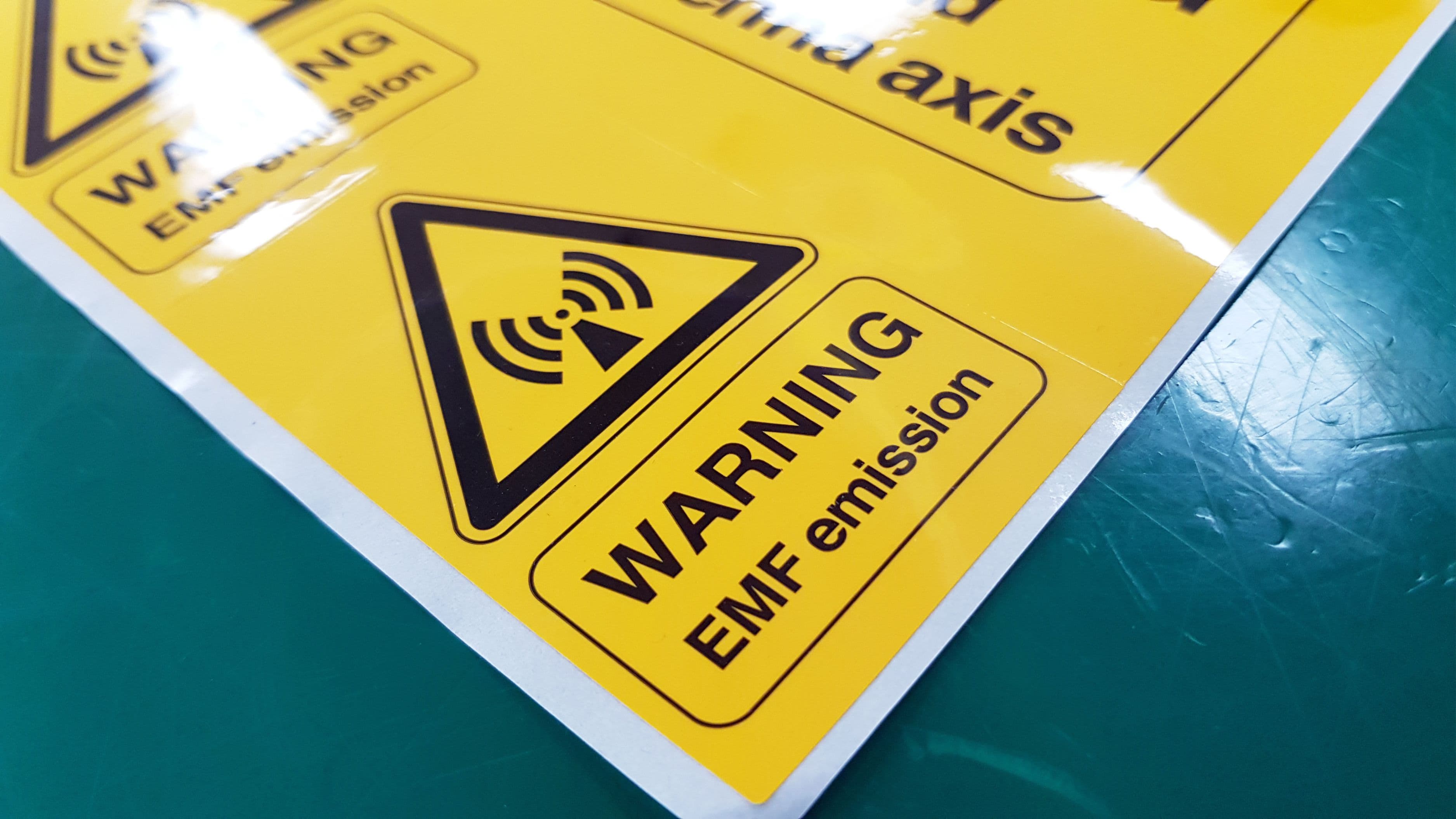
Several commonly promoted claims about grounding lack meaningful research support. EMF protection is the most egregious – the physics don't support the idea that grounding mats protect against radiofrequency exposure, and no credible research backs this claim. Some grounding mat manufacturers market their products primarily on this basis, which should immediately lower your confidence in their claims overall.
"Detoxification" through grounding has no mechanistic basis and no research support. Neither does the claim that grounding reverses chronic disease or produces systemic anti-aging effects beyond what the inflammation research suggests. The honest application of grounding is narrow: potential sleep improvement, cortisol normalization, blood viscosity reduction, and parasympathetic support. Anything beyond that is speculation dressed as evidence.
The research base also hasn't scaled. Most of the foundational grounding studies are from 2004–2015. In the decade since, large-scale replication hasn't happened. That absence isn't evidence against the effect, but it means the field hasn't matured to the point where the findings can be treated as established science.
Practical Application: How to Use Grounding if You're Going to Try It
If you're going to test grounding, the most evidence-supported application is during sleep. The cortisol normalization and sleep quality data come specifically from overnight grounding, and the exposure duration (6–8 hours) is significantly longer than any desk mat or standing pad provides. A grounded sleep mat connected to your outlet's ground port is the relevant format.
The second application worth considering is post-training – sitting or lying on a grounding mat for 30–60 minutes after a training session has theoretical support through the inflammation and blood viscosity mechanisms. This won't replace sleep, cold exposure, or nutrition as recovery tools, but as an additive intervention with near-zero cost and no downside risk, it's a reasonable inclusion.
Desk mats used passively during work have the weakest evidence base. They're sold on the premise that any grounding exposure is beneficial, but the research doesn't support brief, incidental contact producing meaningful physiological change.
What to look for in a mat: Conductivity matters. Silver-threaded mats maintain conductivity better than carbon-based alternatives over time. The mat's connection cord must reach an outlet with a functioning ground – use an outlet tester ($10 at any hardware store) to confirm the ground circuit is live before assuming the mat is working. A non-functional ground means zero effect.
Risks and Limitations
There are no documented safety risks associated with properly functioning grounding mats connected to a grounded outlet. The electrical potential involved is in the millivolt range – not physiologically hazardous. The one exception: if you're on blood thinners or anticoagulants, the blood viscosity effects theoretically compound the drug's action. This isn't a documented clinical risk, but it's worth flagging to a physician before adding grounding to a protocol that includes anticoagulant medication.
The main practical limitation is outlet ground quality. Older buildings, particularly those built before modern electrical codes, may have ungrounded or improperly grounded outlets. The mat is only as effective as the ground it connects to.
Verdict
Grounding mat technology has a real – if modest and preliminary – evidence base for sleep quality, cortisol normalization, blood viscosity reduction, and parasympathetic upregulation. The mechanisms are physiologically coherent, the directional findings are consistent across multiple research groups, and the risk profile is essentially zero. It is not a primary recovery intervention. It is not EMF protection. It does not detoxify anything.
The appropriate framing: grounding is a low-cost, low-effort additive to a recovery stack that already includes sleep optimization, training periodization, and nutrition. Applied during sleep with a properly connected, conductive mat, there's enough evidence to justify the experiment. If cortisol rhythm, HRV, or sleep quality improves measurably after 4–6 weeks, continue. If not, cut it. The downside risk is minimal enough that the experiment is worth running.
FAQ
Does grounding actually work through an outlet, or does it have to be the real Earth? The grounding port of a properly wired outlet connects via a physical wire to a ground rod driven into the Earth outside the building. When connected to that port, the mat is electrically continuous with the Earth. The effect should be equivalent to direct outdoor contact, assuming the ground circuit is functional – which should be verified with an outlet tester.
How long does grounding need to last to produce a measurable effect? The cortisol normalization data comes from overnight (8-hour) grounding. The blood viscosity and HRV studies used 1–2 hour sessions. Brief contact of 10–15 minutes has no meaningful research support for producing measurable physiological change.
Can you replicate the effect just by going barefoot outside? Yes, and direct Earth contact is the original form of grounding with the same mechanistic basis. The advantage of a mat is consistency and convenience – particularly for sleep grounding, which would otherwise require sleeping outdoors. If you're regularly barefoot on grass, soil, or concrete (which conducts), you may already be getting similar exposure.
Is there a difference between grounding mats and grounding sheets? Format only – the mechanism is identical. Sheets are more practical for sleep because they cover a larger surface area and allow more contact. Mats are better suited for desk or floor use. Both need to be connected to a verified ground circuit to function.
What's a reasonable timeline to assess whether grounding is working? Four to six weeks of nightly use with consistent sleep timing is the minimum window to assess cortisol rhythm changes. HRV effects may appear sooner – within one to two weeks if you're tracking morning HRV consistently. If you see no directional improvement in either metric after six weeks, the intervention isn't producing a measurable effect for you specifically.
📚 Sources
Ghaly M, Teplitz D – The Biologic Effects of Grounding the Human Body During Sleep (Journal of Alternative and Complementary Medicine, 2004): https://pubmed.ncbi.nlm.nih.gov/15650465/
Chevalier G et al. – Earthing: Health Implications of Reconnecting the Human Body to the Earth's Surface Electrons (Journal of Environmental and Public Health, 2012): https://pubmed.ncbi.nlm.nih.gov/22291721/
Chevalier G – The Effect of Grounding the Human Body on Mood (Psychological Reports, 2015): https://pubmed.ncbi.nlm.nih.gov/26591096/
Chevalier G et al. – Earthing (Grounding) the Human Body Reduces Blood Viscosity (Journal of Alternative and Complementary Medicine, 2013): https://pubmed.ncbi.nlm.nih.gov/22757749/
Brown R et al. – Grounding After Moderate Eccentric Contractions Reduces Muscle Damage (Open Access Journal of Sports Medicine, 2015): https://pubmed.ncbi.nlm.nih.gov/25848315/
Oschman JL et al. – The Effects of Grounding on Inflammation, the Immune Response, Wound Healing, and Prevention and Treatment of Chronic Inflammatory and Autoimmune Diseases (Journal of Inflammation Research, 2015): https://pubmed.ncbi.nlm.nih.gov/25848315/