
This is not a diabetic management protocol. This is a performance intelligence protocol. The goal is different, the interpretation is different, and the interventions that follow are different. Here's how to run it.
Why Non-Diabetic Athletes Use CGMs
Glucose is the primary substrate for high-intensity exercise and a key modulator of virtually every performance-relevant hormonal axis. Insulin, cortisol, growth hormone, and glucagon are all glucose-responsive. Your ability to access fat as fuel, sustain cognitive clarity during training, recover efficiently, and maintain consistent energy across the day is directly tied to how stable – or unstable – your glucose curve is.
Most athletes assume that because they're metabolically healthy, their glucose is well-regulated. That assumption is frequently wrong in ways that matter for performance. Reactive hypoglycaemia post-meal, glucose spikes that exceed 160–180 mg/dL from carbohydrate sources presumed to be "clean," significant dawn phenomenon elevation, and glucose suppression during high-intensity efforts followed by exaggerated rebound – all of these patterns are invisible without continuous monitoring, and all of them have direct consequences for how you perform and recover.
A CGM gives you the feedback loop that makes carbohydrate timing, pre-workout nutrition, sleep quality assessment, and stress management quantifiable rather than speculative.
Device Selection
Two devices are currently practical for non-diabetic use without a prescription in most markets.
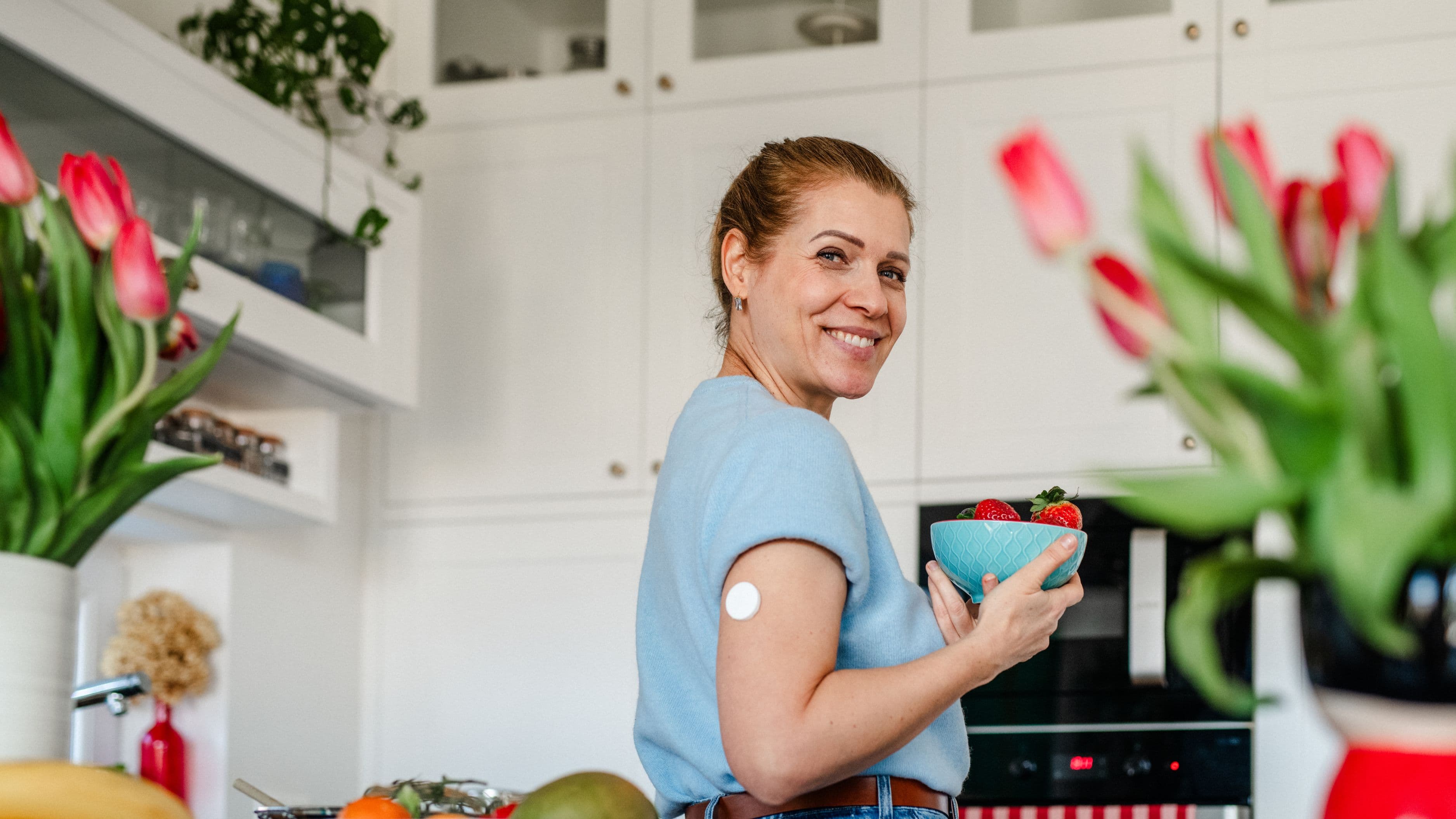
Dexcom G7 is the higher-accuracy option, with a mean absolute relative difference (MARD) of approximately 8.2% – meaning readings are accurate to within roughly 8–10% of actual blood glucose under most conditions. It uses a small flexible sensor worn on the arm or abdomen with a dedicated transmitter, syncs via Bluetooth to a phone app, and provides readings every five minutes with a 10-day wear duration per sensor. The Dexcom app includes trend arrows indicating the direction and rate of glucose change, which is operationally more useful than absolute values alone for athletic applications.
Abbott Libre 3 (previously Freestyle Libre) is more affordable, requires no separate reader (phone-only via NFC or Bluetooth depending on version), and offers comparable wear duration. Its MARD is slightly higher than the Dexcom G7, and it lacks the real-time alarming functionality that the Dexcom provides, but for non-diabetic use where alarms aren't clinically necessary, this is not a material limitation. The Libre 3 is available over the counter in several countries; US athletes may need a prescription or access through a direct-to-consumer metabolic health service.
Levels, Nutrisense, and Supersapiens are CGM-plus-software platforms that provide consumer access to CGM hardware (typically the Libre) alongside proprietary analytics dashboards built specifically for non-diabetic users. If you want guided interpretation rather than raw data management, these platforms reduce the learning curve significantly – at the cost of a subscription fee.
Phase 1: Baseline Mapping (Days 1–7)
The first week of CGM use should not involve any dietary or behavioural changes. The objective is accurate baseline data, not immediate optimisation. Change nothing about how you eat, train, sleep, or supplement. Wear the sensor, observe the data passively, and let your actual patterns emerge.
What you're looking for during baseline mapping:
Your fasting glucose range each morning before food or training. Optimal for a healthy, performance-focused male sits between 70–90 mg/dL. Consistent readings above 95–100 mg/dL fasting warrant attention and potentially further investigation. Consistently elevated fasting glucose can indicate elevated cortisol (check sleep quality and training load), reduced insulin sensitivity, or dawn phenomenon – a natural cortisol-driven hepatic glucose release in the early morning hours.
Your post-meal glucose response across different food sources and meal compositions. Track the peak value, the time to peak, and the time to return to baseline. A well-functioning glucose system should peak under 140 mg/dL from a mixed meal and return to baseline within 2 hours. Peaks above 160 mg/dL from food sources you consider performance-optimised are a data point worth acting on.
Your intra-workout glucose curve. During moderate-intensity steady state, you'll typically see glucose remain stable or drop modestly as muscle uptake increases. During high-intensity intervals or strength training, you'll often see glucose spike – driven by cortisol and adrenaline triggering hepatic glucose output – before dropping in the recovery window. Understanding your personal intra-workout pattern is foundational to rational pre-workout carbohydrate timing.
Your overnight glucose stability. Healthy nocturnal glucose sits between 70–100 mg/dL with minimal variability. Significant dips below 65 mg/dL during sleep can impair growth hormone release and recovery quality. Persistent elevation above 110 mg/dL overnight may indicate cortisol dysfunction or poor sleep architecture driving counter-regulatory hormone activity.
Phase 2: Variable Testing (Days 8–21)
With a baseline established, Phase 2 introduces deliberate single-variable tests. The discipline here is critical – change one thing at a time and observe the glucose response over 2–3 days before drawing conclusions.
Carbohydrate source testing is the most immediately actionable. Test your primary performance carbohydrates – rice, oats, sweet potato, fruit, sports drinks, gels – individually, at your standard serving size, under fasted or training-relevant conditions. You'll discover personal glycaemic responses that deviate substantially from population averages. White rice may produce a sharper spike than oats for you, or it may not. A banana before training may cause a spike-and-crash pattern that impairs your first 15 minutes of work, or it may produce a smooth, sustained curve. You cannot know without the data.
Meal timing experiments test the impact of pre-training meal window on intra-workout glucose. Test training fasted, at 60 minutes post-meal, and at 90–120 minutes post-meal with equivalent carbohydrate loads. Identify the timing window that produces the most stable intra-workout glucose curve for your primary training modality.
Sleep and stress correlation will emerge as a pattern even without deliberate testing. High-stress days – dense work schedules, travel, conflict – will often produce measurably higher fasting glucose and exaggerated post-meal responses the following morning. Nights of poor sleep quality will show similar patterns. This data transforms the conversation about stress management from abstract wellness advice into a quantified performance variable.
Supplementation experiments worth running on CGM: berberine (500mg with meals) consistently reduces post-meal glucose response in non-diabetic users. Apple cider vinegar pre-meal has modest but measurable glycaemic blunting effects. Cinnamon extract has a smaller evidence base but produces detectable responses in some individuals. None of these are substitutes for foundational nutrition, but CGM lets you verify efficacy for your specific physiology rather than relying on population averages.
Phase 3: Protocol Implementation (Days 22–30)
The final phase translates your data into a durable protocol. The output of 30 days of CGM use should be a set of personalised rules that govern:
Your pre-workout carbohydrate source and timing – the specific food, quantity, and window that produces the most stable intra-workout glucose curve for your primary training type. This will differ between strength sessions, high-intensity intervals, and endurance work.
Your post-workout refuelling window – CGM data will show you the glucose nadir that follows intense training and tell you how wide that window actually is before glucose suppression becomes a recovery liability. Most athletes underestimate how quickly this window closes.
Your highest-sensitivity meal times – most people show significantly greater glucose spikes from identical meals consumed in the evening compared to morning, driven by reduced peripheral insulin sensitivity later in the day. If you're eating performance carbohydrates, earlier is generally better.
Your sleep protection non-negotiables – the dietary and behavioural patterns (late meals, alcohol, high-stress evenings) that most reliably degrade your overnight glucose stability and therefore your recovery quality.
Risks, Limitations, and What CGM Won't Tell You
CGM measures interstitial glucose, not blood glucose directly. There is a 5–15 minute lag between blood glucose changes and interstitial fluid changes, which matters most during rapid glucose transitions – exercise onset, immediate post-meal period. Factor this lag into your interpretation of intra-workout data.
Sensor accuracy degrades with significant physical pressure on the sensor site, extreme temperature variation, and high-dose Vitamin C supplementation, which can artificially lower readings on some devices. Rotate sensor placement and note environmental conditions when readings seem anomalous.
CGM data does not tell you about insulin levels, insulin sensitivity directly, or metabolic flexibility (the capacity to switch between glucose and fat oxidation efficiently). It is one powerful data stream, not a complete metabolic assessment. Athletes seeking a fuller picture should consider pairing CGM data with periodic fasting insulin testing and a metabolic breath test (such as those offered by Lumen or Breezing) to directly assess fuel utilisation.
Finally, not every glucose spike requires an intervention. The goal for a non-diabetic athlete is not a flatline glucose curve. Exercise-induced spikes are physiologically normal and performance-appropriate. The data is a tool for understanding patterns – not a directive to eliminate variability at all costs.
Expected Outcomes and Timeline
Within the first two weeks, most athletes identify at least one significant nutritional pattern they did not expect – a food presumed to be low-glycaemic that spikes them hard, a pre-workout strategy that's actively working against early training performance, or a fasting glucose elevation that correlates with sleep quality in a way that makes the cost of poor sleep viscerally concrete.
By the end of 30 days, you should have enough data to build a personalised carbohydrate protocol that produces measurably more stable intra-workout glucose, improved post-training recovery speed (validated by reduced perceived soreness and faster return to baseline HRV if you're tracking it), and a clearer picture of which lifestyle variables hit your metabolic function hardest.
Repeat a CGM cycle every 6–12 months, or after any major shift in training load, body composition, or dietary approach. Glucose physiology is not static.
FAQ
Do I need a prescription to get a CGM as a non-diabetic? In the US, technically yes for prescription-only devices – but direct-to-consumer platforms like Levels Health, Nutrisense, and Supersapiens provide physician-facilitated access that functions like an OTC purchase in practice. In the UK, Canada, Australia, and much of Europe, the Abbott Libre series is available without a prescription at pharmacies or online.
Will training with a CGM sensor cause inaccurate readings during exercise? Some inaccuracy during high-intensity exercise is expected and normal. The lag between blood and interstitial glucose, combined with increased arm movement affecting the sensor, can cause brief anomalous readings. The trend direction (rising, falling, stable) remains informative even when absolute values are less reliable during exercise. Do not make real-time fuelling decisions based solely on a CGM reading during an intense session.
What's the ideal glucose range to target during training? For most strength and HIIT work, starting a session with glucose between 90–120 mg/dL tends to produce the most consistent performance. For endurance efforts over 90 minutes, higher starting glucose (100–130 mg/dL) provides a larger buffer against mid-session depletion. These are directional targets, not rigid rules – your personal CGM data will refine them based on your actual response patterns.
Is there a risk of becoming overly fixated on glucose numbers? Yes, and it's worth naming directly. For athletes without metabolic disease, CGM data is an intelligence-gathering tool, not a clinical management system. The goal is pattern recognition over weeks, not moment-to-moment optimisation. Checking your CGM every 10 minutes during a workout or refusing to eat a food because it produces a 150 mg/dL transient spike is an overcorrection that produces anxiety without commensurate performance benefit. Use the data strategically.
📚 Sources
Dexcom – G7 Accuracy and Technical Specifications: https://www.dexcom.com/en-us/g7
Abbott – Freestyle Libre 3 System Overview: https://www.freestyle.abbott/us-en/products/freestyle-libre-3.html
Cell Metabolism – Personalized Nutrition by Prediction of Glycaemic Responses (Weizmann Institute): https://www.cell.com/cell/fulltext/S0092-8674(15)01481-6
Journal of Clinical Endocrinology & Metabolism – CGM in Non-Diabetic Athletes: https://academic.oup.com/jcem/article/104/11/5349/5538958
Sports Medicine – Carbohydrate Timing and Athletic Performance: https://link.springer.com/article/10.1007/s40279-013-0079-0