This guide covers how to run an efficient search in 2026, how to protect yourself from rental scams, and how to make a rental stylish and comfortable on a sensible budget.
Set Up Your Search Before You Start Looking
Define Your Criteria
Write down your maximum total monthly housing cost, your preferred neighborhoods, your target move-in date, and three to five non-negotiable features. A clear brief speeds up every decision and prevents you from being swayed by impressive but irrelevant amenities.
Time Your Search
Many renters begin looking roughly 30 to 60 days before their target move-in date, since that's when many listings for that period appear. Rental demand often peaks in summer, which can mean more competition. Searching in the fall or winter can open more negotiating room and potential move-in specials, depending on your market.
Prepare Your Application Package
Have these ready before you tour: government-issued ID, recent pay stubs or an offer letter, bank statements, references from previous landlords, and your credit report. Being able to apply immediately can make the difference in a competitive market.
Running an Efficient Search
Use Multiple Channels
Search across major listing platforms, local property management websites, and neighborhood community groups. Some smaller landlords advertise only locally. Setting up alerts for your criteria helps you see new listings quickly.
Use Virtual Tours as a Filter, Not a Decision
Virtual tours and video walkthroughs save time by eliminating poor fits early. But they hide noise, odors, light, and the condition of fixtures. Treat them as a screening step, and see the unit in person – or send someone you trust – before you sign or pay.
Evaluate Total Cost, Not Rent Alone
Ask about utilities, parking, pet fees, amenity fees, and any other monthly charges. Two units with similar rent can differ significantly once all costs are included.
Protect Yourself From Rental Scams
Rental scams remain common, especially on online marketplaces. The FTC warns about several red flags:
The landlord asks you to pay a deposit or rent before you see the unit or sign a lease.
Payment is requested by wire transfer, gift card, cryptocurrency, or another method that's hard to reverse.
The rent is far below comparable units in the area.
The "landlord" claims to be out of the country and can't show the property.
Verify ownership through local property records when possible, and never hand over money until you've confirmed the listing is legitimate.
Making a Rental Stylish Without Losing Your Deposit
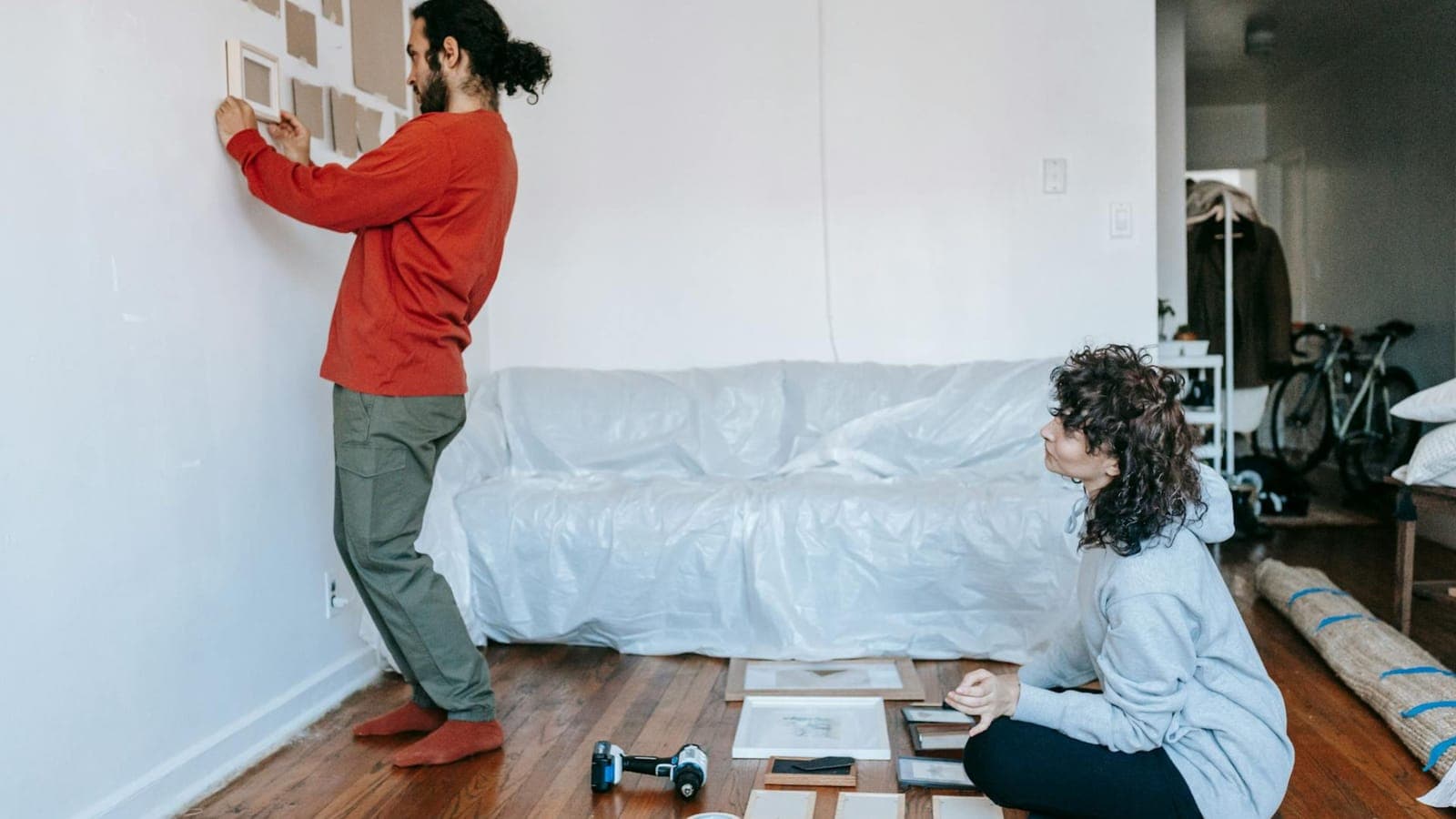
The challenge with rentals is improving the space without permanent changes. Read your lease for rules on painting, drilling, and alterations, and get any approvals in writing.
Lighting Has the Biggest Impact
Overhead lighting in rentals is often harsh. Adding floor lamps and table lamps with warm bulbs creates layered, comfortable lighting. Plug-in wall sconces add a finished look without hardwiring. For sleep, warmer and dimmer lighting in the evening is generally preferable to bright, blue-heavy light.
Use Textiles Strategically
Rugs, curtains, and bedding change the feel of a room quickly. Rugs also reduce noise, which matters for both you and the neighbors below. Hanging curtains closer to the ceiling than the window frame can make ceilings look taller.
Choose Removable Upgrades
Removable wallpaper, adhesive hooks, tension rods, and freestanding shelving let you personalize the space without damage. Swapping cabinet hardware or a showerhead can make a difference – just keep the originals and reinstall them before you move out.
Prioritize Function Over Decor
Invest first in items that support daily life: a quality mattress, a supportive desk chair if you work from home, and storage that keeps the space organized. Decorative pieces can come later.
Comfort Upgrades Worth Considering
Blackout curtains improve sleep in bright urban environments. A portable air purifier can help in units with limited ventilation. Draft stoppers and weatherstripping, where permitted, can improve comfort and reduce energy costs. A white noise machine can mask street or building noise.
Realistic Expectations
You likely won't find a unit that's perfect on every dimension. Some compromise on size, location, or finishes is normal. Rental prices and competition vary widely by city, and conditions can change quickly. Focus on getting the fundamentals right – budget, location, sleep environment, and condition – and let style come through smart, reversible choices.
Mistakes to Avoid
Don't send money before verifying the listing and seeing the unit. Don't sign a lease without reading the full document, including fees and renewal terms. Don't make unauthorized changes that could cost you your deposit. And don't overspend on furniture before you've lived in the space long enough to know what it needs.
FAQ
When should I start looking for an apartment?
Many renters start about 30 to 60 days before their move-in date, though competitive markets may require acting quickly once a good unit appears.
What documents do I need to rent an apartment?
Typically ID, proof of income, bank statements, landlord references, and consent for a credit and background check.
How can I decorate a rental without losing my deposit?
Use removable wallpaper, adhesive hooks, lamps, rugs, and textiles, and get written approval for any changes beyond that.
How do I spot a rental scam?
Watch for requests to pay before seeing the unit, unusual payment methods, below-market rent, and landlords who can't meet in person.
The Bottom Line
Successful apartment hunting in 2026 comes down to preparation, verification, and smart follow-through. Define your criteria, have your documents ready, and evaluate total costs. Protect yourself from scams by never paying before you verify. Once you've moved in, focus on lighting, textiles, and removable upgrades to create a stylish, comfortable home without risking your deposit.
This article is for general informational purposes only and is not legal advice. Rental rules and lease terms vary by location. Review your lease carefully and check local regulations before making changes to a rental property.
📚 Sources
Federal Trade Commission – Rental Listing Scams: https://consumer.ftc.gov/articles/rental-listing-scams
U.S. Department of Housing and Urban Development – Tenant Rights, Laws and Protections: https://www.hud.gov/topics/rental_assistance/tenantrights
AnnualCreditReport.com – Free Credit Reports: https://www.annualcreditreport.com/
U.S. Department of Energy – Weatherstripping: https://www.energy.gov/energysaver/weatherstripping