
The smart lighting market is full of products that claim circadian support. Most of them deliver marginal benefit because they conflate color temperature change with meaningful photobiological intervention. Changing a bulb from 6500K to 2700K at 9pm looks warmer on the wall and does almost nothing to your melanopsin-driven circadian system if the luminance is still high. The mechanism matters. Understanding it separates the products that produce measurable outcomes from the ones that produce aesthetically pleasing amber light and nothing else.
This article covers the photobiology, the metrics that actually matter, and the specific systems worth implementing.
The Mechanism: Melanopsin, ipRGCs, and the Circadian Drive
Your circadian rhythm is regulated primarily through a subset of photoreceptors in the retina called intrinsically photosensitive retinal ganglion cells (ipRGCs). These cells contain the photopigment melanopsin, which is maximally sensitive to short-wavelength blue light in the 480nm range. ipRGCs project directly to the suprachiasmatic nucleus (SCN) in the hypothalamus – the master circadian clock – and to the pretectal area that governs the pupillary light reflex.
The critical distinction: ipRGCs are not cone photoreceptors. They don't care about color temperature the way your conscious visual system does. What drives melanopsin activation is intensity and spectral composition at the retina – specifically, photons in the 460–490nm range, regardless of what the rest of the spectrum looks like. This is why a warm-appearing amber light at high intensity still suppresses melatonin, and why a cool-appearing light at very low intensity may not. The color you see and the circadian signal your SCN receives are related but not equivalent.
Two metrics matter more than color temperature for circadian intervention: melanopic lux (the illuminance weighted for ipRGC sensitivity, also called melanopic equivalent daylight illuminance or mEDI) and spectral power distribution (SPD) of the light source. The CIE S 026 standard provides the formal framework for measuring melanopic lux. In practical terms: a high melanopic lux value means strong circadian stimulus; a low value means minimal circadian disruption. Most smart lighting apps and marketing material do not report melanopic lux. They report correlated color temperature (CCT) in Kelvin, which is a proxy that misleads as much as it informs.
What the Research Establishes
The foundational research from Brainard et al. (2001) and Thapan et al. (2001) – both published within months of each other – independently identified 480nm as the peak wavelength for melatonin suppression via the melanopsin system. This was later confirmed and refined through ipRGC-specific research, establishing the photobiological basis for blue-light circadian intervention.
The WELL Building Standard and the Illuminating Engineering Society (IES) TM-12 framework now provide actionable guidance derived from this research. The key evidence-based targets:
Morning: 250+ melanopic lux at the eye within the first hour of waking to drive a robust cortisol awakening response (CAR) and anchor the circadian phase. Bright, blue-enriched light (5000–6500K, high intensity, positioned to hit the lower visual field where ipRGC density is highest) is the stimulus.
Daytime: Maintain 200+ melanopic lux during working hours to sustain alertness, suppress daytime melatonin, and reinforce the circadian signal. This typically requires either direct sunlight, a dedicated bright light therapy device, or a smart lighting system capable of delivering high-intensity cool-spectrum output.
Evening (2–3 hours before sleep): Reduce melanopic lux below 10 at the eye. Below 1 melanopic lux is the target for sleep-critical periods. This is where the 2700K amber-glow of most "evening mode" smart systems typically fails – they may hit 2700K color temperature but at 300+ lux total illuminance, melanopic lux is still well above threshold.
Night (lights on): If light is needed after sunset, use red-wavelength dominant sources (>600nm). Melanopsin has minimal sensitivity above 600nm. Red light at low intensity has essentially no measurable circadian disrupting effect.
The Systems That Actually Deliver
Philips Hue – Capable, Properly Configured
Philips Hue is the most widely available smart lighting ecosystem and is capable of meaningful circadian intervention when configured correctly. The critical qualifier is "configured correctly" – the default Hue Labs circadian app and the built-in Natural Light scene cycle through color temperature with little regard for melanopic lux targets, which produces visually pleasing transitions without necessarily hitting the biological thresholds.
The Hue system's actual capability is solid. The Color Ambiance bulbs cover the full 2000K–6500K range. At full brightness (800 lm, 6500K), Hue Color bulbs deliver approximately 200–250 melanopic lux at typical desk distance – adequate for daytime circadian anchoring but not a substitute for a dedicated bright light therapy device. The evening reduction works if you combine aggressive dimming (below 10% brightness) with the warmest color temperature setting, which brings melanopic lux down to acceptable levels.
What Hue requires: third-party automation via Home Assistant or Circadian Lighting (a Home Assistant integration built specifically around melanopic lux targets rather than CCT). The native Hue app does not provide melanopic lux data. Out of the box, it is a color-temperature cycling system. With proper automation, it becomes a functional circadian lighting protocol.
Verdict: High capability, low turnkey delivery. Best for users comfortable with custom automation.
LIFX – High Output, Underutilized
LIFX bulbs are among the highest-output consumer smart bulbs available, which matters for the daytime circadian signal where luminance is the primary driver. The LIFX A21 1100 lm bulb at 6500K delivers meaningfully higher melanopic lux than standard 800 lm Hue bulbs at similar distances, making it a legitimate upgrade for desk-level daytime light therapy without a dedicated bright light panel.
LIFX has no hub requirement and integrates natively with HomeKit, Alexa, and Google Home. For circadian automation, integration with Home Assistant using the Adaptive Lighting integration is the most precise approach. LIFX's native app schedules are CCT-based rather than melanopic lux-based, the same limitation as Hue's native software.
The LIFX Clean (antibacterial HEV light) and LIFX Candle are specialty products not relevant to circadian optimization. The A19 and A21 standard bulbs in the 6500K setting are the relevant products for this protocol.
Verdict: Best high-lumen consumer option for daytime circadian signal. Same software limitations as Hue without custom automation.
Ketra (Lutron) – Clinical-Grade, Commercial Price
Ketra, Lutron's high-end lighting system, is the only consumer-accessible product that formally integrates melanopic lux targeting rather than CCT approximation. Ketra's tunable white fixtures specify output in melanopic lux and adjust dynamically across a 1400K–10000K range – a significantly wider gamut than Philips Hue or LIFX. The system is used in hospitals, research facilities, and WELL-certified buildings precisely because it meets clinical-grade photobiological standards.
The trade-off is cost. A Ketra installation runs $3,000–$15,000+ depending on fixture count and installation complexity. It requires a certified Lutron dealer and professional installation. For a dedicated high-performance home office or bedroom circadian optimization where you want set-it-and-verify performance without DIY automation, Ketra is the only turnkey system that delivers against actual melanopic lux targets.
Verdict: The only consumer-accessible system with formal melanopic lux specification. Appropriate for users with the budget and desire for a professionally installed, clinically grounded solution.
Human Centric Lighting Fixtures (Cree, GE, TrueLight)
Several fixture manufacturers now market "human centric lighting" or "circadian-ready" products. The quality varies significantly. Cree's TW Series tunable white fixtures are designed to WELL standard specifications and deliver high melanopic lux at the cool-spectrum end while maintaining meaningful blue-light reduction at the warm end. GE's Align Series is similarly positioned.
TrueLight produces full-spectrum bulbs and task lights specifically marketed for circadian support. Their products have reasonable spectral credentials, though they operate in the fixed-spectrum category (not tunable) and require a separate timer or smart switch for schedule-based automation.
These products close part of the hardware gap – better spectral output than generic smart bulbs – but none provides the integrated scheduling and automation of a full smart lighting system. They are most useful as supplemental sources (desk lamp, bedside lamp) within a broader protocol.
Verdict: Useful supplemental components. Not standalone circadian systems.
Red Light Panels for Evening and Night
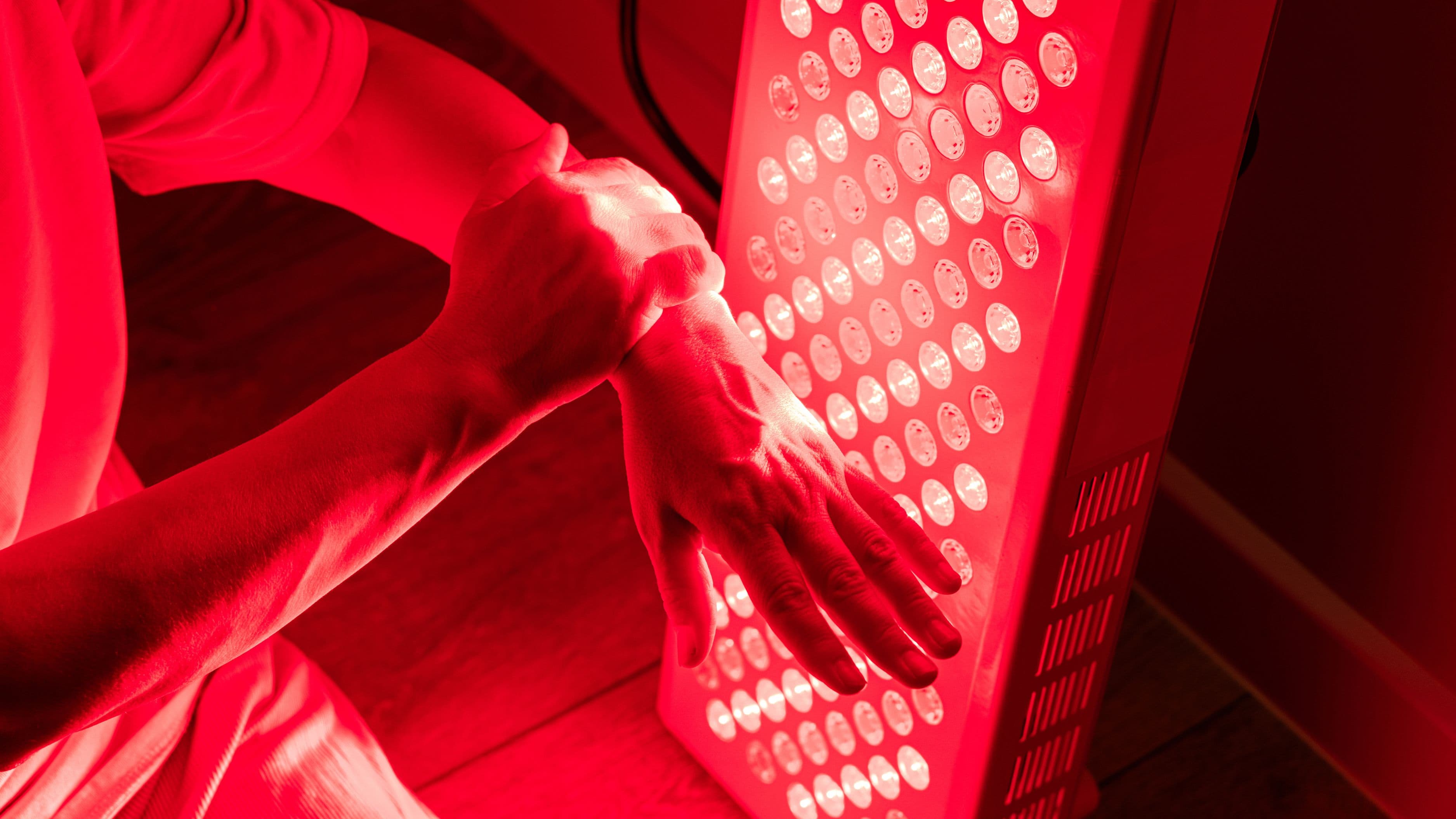
This category sits adjacent to smart lighting but is directly relevant to the evening/night phase of the protocol. Dedicated red light panels – primarily marketed for photobiomodulation (PBM) – emit predominantly in the 630–850nm range, which has near-zero melanopic impact. Used as room lighting in the 2–3 hours before sleep, they provide functional illumination without circadian disruption.
The Joovv Solo, Mito Red, and GembaRed panels dominate this space and are well-documented for PBM applications. For evening ambient lighting specifically, any red or near-infrared dominant light source at low intensity serves the circadian function. Simple red LED strips (ensure they are truly narrowband red, not "warm white" with red color mixing) or Saratoga Lighting red bulbs are cost-effective solutions that deliver essentially zero melanopic activation.
Verdict: The only lighting solution appropriate for the 2+ hours before sleep outside of total darkness. Not a smart system in the automation sense, but the correct circadian tool for that phase of the day.
The Protocol: Implementation by Phase
Morning (Wake to 60 Minutes Post-Wake)
Target: 250+ melanopic lux at the eye. Position matters – light from above and in front, not behind. The most effective implementation is a dedicated bright light therapy device (Luminette 3 wearable, Carex Day-Light Classic Plus, or Lumie Vitamin L) used concurrently with your morning routine, supplemented by smart lighting at maximum brightness and cool color temperature throughout the space. If sun exposure is accessible, 10–20 minutes of direct outdoor light within the first hour of waking delivers 1000–10,000+ melanopic lux and dominates any artificial system.
Daytime Working Hours
Target: 200+ melanopic lux sustained. At desk level, this requires either a high-output smart bulb positioned within 2–3 feet of the eye at the cool spectrum maximum, or a dedicated panel light at desk level. A standard overhead room light at 6500K and 60W equivalent does not achieve this at typical ceiling height. The geometry of the light source matters: light angled to enter the lower visual field (where ipRGC density is highest) is more effective than overhead-only illumination at the same melanopic lux level.
Evening (Sunset to 2 Hours Before Sleep)
Begin reducing melanopic lux at local sunset or earlier. Automate your smart system to shift to 2700K and begin progressive dimming. By 2 hours before target sleep time, bright overhead lights should be off. Remaining illumination should come from low-level warm lamps, candles, or red-spectrum sources. If you use screens, Night Shift (iOS/macOS) or f.lux on Windows reduces blue light emission, though screen brightness management matters as much as color temperature shift.
Nighttime (Final 60 Minutes Before Sleep and Night Waking)
Zero melanopic lux is the target. Total darkness is optimal. If light is needed, red-only sources. Night waking in particular is a vulnerability – a standard bathroom light at 3am produces significant melatonin suppression. Install a red nightlight on the bathroom circuit. Automate it to a motion sensor at the 10–20 lux red range maximum.
What to Ignore
CCT-only marketing: Any product or protocol that frames circadian optimization solely in terms of color temperature (Kelvin) without addressing luminance and melanopic lux is operating with an incomplete model. Color temperature is a proxy that fails in both directions – warm light at high intensity still disrupts, and cool light at very low intensity does not.
"Blue light blocking" glasses as a primary intervention: Blue-light-blocking glasses reduce retinal blue-light exposure and have some evidence for melatonin preservation when used in the evening. They are a compensatory tool, not a substitute for environmental light control. Relying on glasses while running high-intensity overhead lighting in the final hour before sleep addresses the symptom partially while leaving the core problem intact.
Incandescent "warm" bulbs as an evening solution: A standard incandescent at full brightness runs around 2700K, which marketers might describe as warm and circadian-friendly. At 800 lm output, the melanopic lux at reading distance is still meaningful. The color temperature is suitable; the luminance needs to drop substantially. Dim them below 20% or use a single low-wattage incandescent (25W or lower) for bedside reading.
Expected Results and Timeline
Circadian entrainment responds relatively quickly to consistent light-dark signaling. With a properly implemented protocol – bright morning light, maintained daytime exposure, aggressive evening reduction – measurable changes in sleep onset latency, sleep quality scores (via HRV or Oura data), and morning alertness typically appear within 7–14 days. Full circadian re-entrainment after a significantly disrupted schedule (shift work recovery, jet lag, extended poor light hygiene) takes 2–4 weeks of consistent protocol adherence.
Subjective morning alertness is usually the first improvement. Sleep onset speed follows. Deeper HRV improvements reflecting ANS regulation and recovery quality are visible at the 3–4 week mark in wearable data.
Frequently Asked Questions
Does melanopic lux data exist for specific bulbs? Some manufacturers publish spectral power distribution data from which melanopic lux can be calculated using the CIE S 026 framework. For Philips Hue, independent researchers have published melanopic lux estimates across their product line. The WELL building standard's resources include calculation tools. Consumer-grade spectrometers (UPRtek MK350D, Asensetek Lighting Passport) can measure SPD directly if precision verification is warranted.
Is the Philips Hue Gradient Lightstrip useful for circadian purposes? Gradient lightstrips produce ambient indirect light at low intensity. For circadian stimulation, the geometry is poor – indirect light reflected off walls delivers a fraction of the melanopic lux of a direct source at the same wattage. Lightstrips are aesthetically functional but not a meaningful part of a circadian protocol.
Can smart lighting fully replace outdoor morning light exposure? No. Even the highest-output consumer smart lighting systems top out at 300–500 melanopic lux at practical distances. Outdoor daylight on a clear morning delivers 10,000–50,000+ lux, with melanopic content proportional to sky exposure. Smart lighting supplementation is appropriate when outdoor access is limited; it is not a direct substitute.
How does the Oura Ring or WHOOP capture circadian quality? Neither device measures circadian phase directly. HRV timing, resting heart rate patterns, and sleep stage data from wearables provide indirect indicators of circadian alignment. A well-entrained circadian rhythm typically shows stable, predictable HRV patterns and improved slow-wave and REM sleep proportions. These metrics improve measurably with protocol adherence and provide useful feedback for protocol adjustment.
What about SAD lamps – are they circadian tools or separate? SAD (seasonal affective disorder) lamps and bright light therapy panels overlap significantly with circadian morning light tools. A 10,000 lux panel used in the morning delivers strong circadian stimulus as well as the mood and energy effects associated with SAD treatment. The Carex Day-Light Classic Plus and Lumie Vitamin L are validated for SAD treatment and simultaneously serve the morning circadian anchoring function. They are the most evidence-supported morning light tools available.
Light management is not a wellness aesthetic. It is the primary lever for circadian entrainment, and circadian alignment is upstream of sleep architecture, testosterone, cortisol timing, cognitive performance, and recovery quality. A properly implemented lighting protocol costs less than most supplements in this space and outperforms nearly all of them on downstream hormonal and cognitive variables. Build the environment first.
📚 Sources
Brainard GC et al. – Action Spectrum for Melatonin Regulation in Humans: Evidence for a Novel Circadian Photoreceptor, Journal of Neuroscience (2001): https://www.jneurosci.org/content/21/16/6405
Thapan K et al. – An Action Spectrum for Melatonin Suppression: Evidence for a Novel Non-Rod, Non-Cone Photoreceptor System in Humans, Journal of Physiology (2001): https://physoc.onlinelibrary.wiley.com/doi/10.1111/j.1469-7793.2001.t01-1-00261.x
CIE S 026 – CIE System for Metrology of Optical Radiation for ipRGC-Influenced Responses to Light: https://cie.co.at/publications/cie-system-metrology-optical-radiation-iprgc-influenced-responses-light-0
WELL Building Standard – Light Concept Overview: https://www.wellcertified.com/certification/v2/light
Illuminating Engineering Society – TM-12: Spectral Effects of Lighting on Visual Performance at Mesopic Lighting Levels: https://www.ies.org/product/spectral-effects-of-lighting-on-visual-performance-at-mesopic-lighting-levels
Lucas RJ et al. – Measuring and Using Light in the Melanopsin Age, Trends in Neurosciences (2014): https://www.cell.com/trends/neurosciences/fulltext/S0166-2236(13)00215-5
Zeitzer JM et al. – Sensitivity of the Human Circadian Pacemaker to Nocturnal Light: Melatonin Phase Resetting and Suppression, Journal of Physiology (2000): https://physoc.onlinelibrary.wiley.com/doi/10.1111/j.1469-7793.2000.t01-1-00695.x