
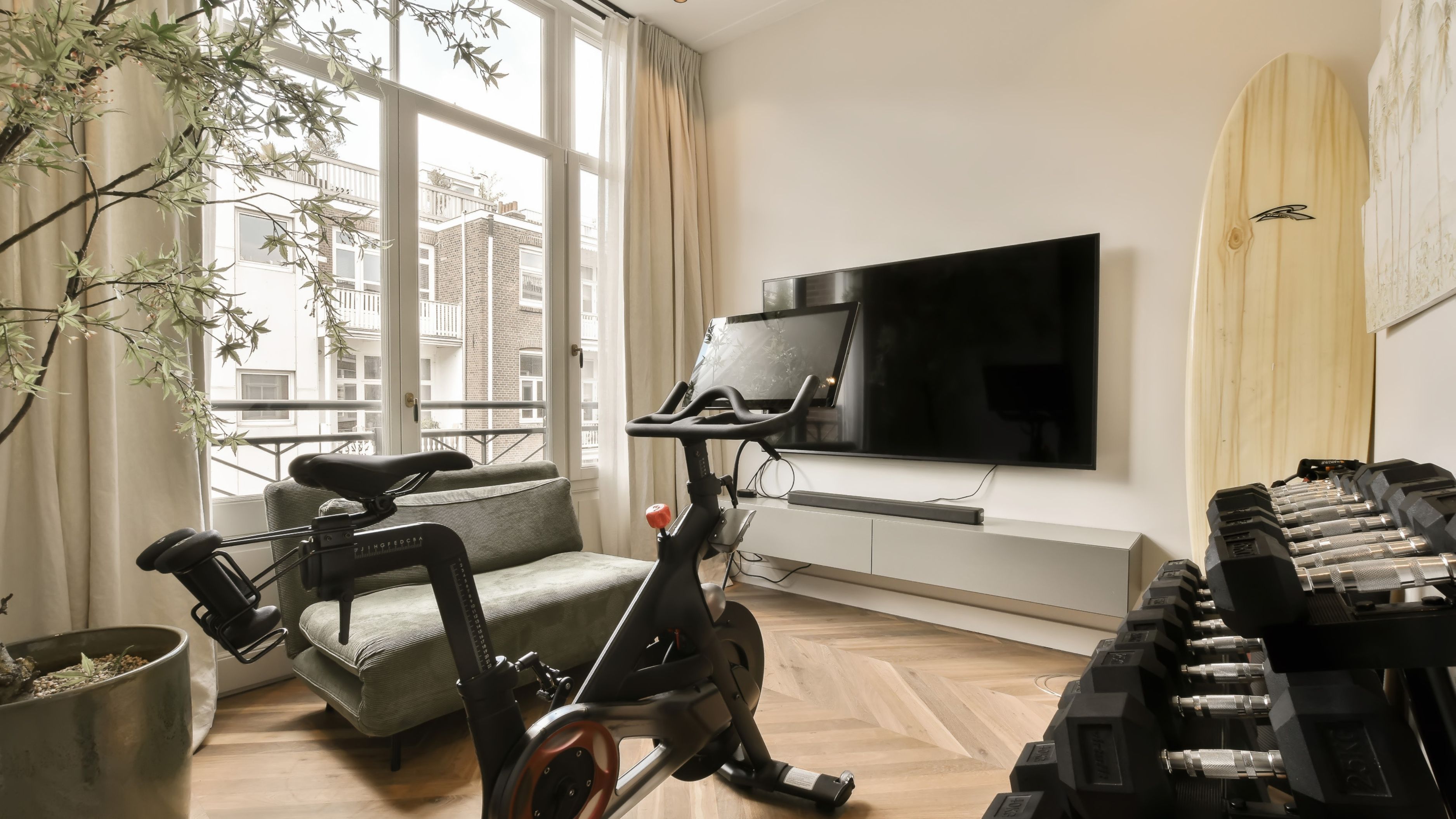
The challenge is that barbell work, plyometrics, and recovery work each demand different things from a floor. Heavy barbell training needs density and impact absorption that protects both the floor and your joints. Plyometric work needs enough give to reduce joint stress without becoming unstable underfoot. Recovery work, stretching, mobility, breathwork, needs comfort and cleanliness more than shock absorption.
Most home gyms end up compromising across all three, which is fine, as long as it's an informed compromise instead of an accidental one.
Comparison Overview
Horse Stall Mats
Thickness: Typically 3/4 inch
Density: Very high, built for heavy livestock impact
Cost: $30–$50 per 4x6 foot mat
Best for: Heavy barbell work, garage gyms prioritizing durability over comfort
Rubber Rolls
Thickness: 1/4 to 1/2 inch standard, up to 3/4 inch for heavy-duty
Density: Moderate to high depending on thickness
Cost: $1.50–$4 per square foot
Best for: Full-room coverage, seamless large-area installs
Interlocking Rubber Tiles
Thickness: 1/2 to 1 inch
Density: Moderate, varies significantly by manufacturer
Cost: $2–$6 per square foot
Best for: Mixed-use spaces needing flexibility and easy replacement
High-Density Foam Tiles
Thickness: 3/4 to 1 inch
Density: Low to moderate, softer underfoot
Cost: $1–$3 per square foot
Best for: Recovery zones, plyometrics, stretching areas
Breakdown by Option
Horse Stall Mats: The Barbell Standard
Stall mats have become the default recommendation for serious home barbell training for a reason: they're built to handle far more abuse than anything marketed specifically as gym flooring, at a fraction of the cost per square foot. A 3/4 inch stall mat over a solid subfloor absorbs the impact of dropped plates far better than most dedicated "gym tiles," and it's dense enough that it won't compress or shift under a loaded barbell path over years of use.
The trade-off is comfort and installation. Stall mats are heavy, often 90 to 100 pounds per mat, which makes them difficult to move or cut precisely without a utility knife and real effort. They're also firmer underfoot than most people expect for anything beyond standing and lifting, which makes them a poor standalone choice if your gym space also needs to handle mobility work or extended time sitting or lying on the floor.
Mechanism: Density is what matters here, not thickness alone. A denser 3/4 inch mat outperforms a less dense 1-inch alternative for impact absorption because it resists compression under load rather than bottoming out against the subfloor beneath it.
Rubber Rolls: Best for Full-Coverage Consistency
Rolled rubber flooring covers large areas without seams between individual pieces, which matters more than it sounds like for barbell work specifically. Seams between interlocking tiles can shift slightly under repeated heavy impact over time, creating uneven spots that affect footing during heavy lifts. A single rolled section eliminates that variable entirely across a large lifting platform area.
Thickness matters significantly more with rolls than with mats. A quarter-inch roll is fine for general gym use and machine areas but inadequate for dropped barbell impact, while 3/4 inch heavy-duty rolls perform close to stall mat levels of protection. The cost scales accordingly, and cutting large rolls to fit a specific room layout is a more involved installation process than laying interlocking tiles.
Mechanism: Continuous rubber distributes impact force across a wider surface area than segmented tiles, reducing point-loading on any single spot and lowering long-term wear in high-traffic zones like a squat or deadlift platform.
Interlocking Tiles: Flexibility Over Maximum Durability
Interlocking tiles are the most practical option for a garage or spare room gym that needs to serve multiple purposes and potentially get reconfigured over time. Individual tiles can be replaced if damaged without redoing an entire floor, and installation requires no adhesive or cutting large sections, which makes this the fastest setup option of the four.
The compromise is consistency. Quality varies enormously across manufacturers, and cheaper interlocking tiles compress and separate at the seams faster under heavy barbell impact than either stall mats or rubber rolls. For pure barbell training, this is generally the weaker option unless you're specifically buying a heavy-duty, high-density product built for that purpose rather than general home gym use.
Mechanism: The interlocking seams that make installation easy are also the structural weak point under concentrated heavy impact, since repeated stress at the connection points gradually loosens the fit over time.
High-Density Foam Tiles: Built for Recovery and Plyometrics
Foam tiles serve a different purpose entirely and shouldn't be your only flooring if barbell work is part of your training. Their lower density makes them comfortable for stretching, mobility work, and floor-based recovery protocols, and they provide meaningfully better joint cushioning for plyometric work like box jumps and bounding drills than firmer rubber options.
The downside is durability under heavy load. Foam compresses permanently over time under concentrated weight, meaning a squat rack or heavy barbell station on foam tiles will show visible, lasting indentation within months. This makes foam a strong choice for a designated recovery or plyometric corner of your space, but a poor choice for your primary lifting platform.
Mechanism: Lower density foam absorbs and disperses impact energy more effectively for lighter, higher-frequency loads like jumping, but that same low density means it deforms permanently under sustained heavy weight rather than springing back.
Best Setup for a Multi-Purpose Home Gym
For most serious home gym builds, the smartest approach is zone-based flooring rather than one material covering the entire space. Use stall mats or heavy-duty rubber rolls under your barbell and rack area specifically, since that's where impact protection matters most. Use interlocking tiles or foam tiles in a separate section dedicated to plyometrics, mobility work, and recovery, where comfort and joint protection matter more than maximum density.
This zoned approach costs slightly more in planning but solves the actual underlying problem: no single material genuinely optimizes for all three use cases simultaneously, and trying to force one to do so means compromising on whichever activity matters most to your training.
Realistic Expectations and Installation Notes
Budget roughly $2 to $4 per square foot for a durable, multi-purpose setup combining zones, more if you're covering a large garage entirely in heavy-duty rubber. Stall mats specifically require a trip to a farm supply store rather than a fitness retailer, and they're significantly cheaper per square foot than anything marketed directly at home gym builders, despite offering comparable or better protection for barbell work specifically.
Expect any flooring installed directly over concrete to still transmit some vibration and noise to floors below if you're in a multi-level home or apartment. Flooring reduces impact stress on joints and protects the subfloor from denting or cracking, but it does not fully eliminate sound transmission, and additional soundproofing measures are a separate consideration if noise is a concern.
Mistakes to Avoid
Don't install foam tiles under a squat rack or barbell platform expecting them to hold up the same way rubber does. Permanent compression under load is a matter of when, not if, with foam in a high-impact zone.
Don't assume thickness alone determines protection quality. A thin, dense stall mat often outperforms a thicker but lower-density foam or budget rubber tile for genuine impact absorption under heavy barbell drops.
Don't skip checking your subfloor condition before installing anything. Flooring reduces impact transfer, but it doesn't fully compensate for an already compromised or unstable subfloor underneath it.
FAQ
Can I use the same flooring for barbell work and plyometrics? You can, but it's a compromise in both directions. Dense rubber protects better for barbells but offers less joint cushioning for jumping, while softer options protect joints better but wear down faster under heavy barbell impact.
Are stall mats actually safe for indoor home gym use? Yes, they're widely used in home gyms specifically because of their density and durability, though they carry a stronger rubber odor initially than gym-specific flooring, which fades over several weeks of ventilation.
How thick does my flooring need to be for Olympic lifting or heavy barbell drops? At minimum 3/4 inch, with high density mattering more than thickness alone. Serious Olympic lifting setups often use layered mats for additional protection.
Will good flooring eliminate noise from dropped weights for neighbors or family below? It significantly reduces impact noise but doesn't eliminate it entirely, especially structure-borne vibration through concrete or subfloors in multi-level homes.
📚 Sources
National Institutes of Health – Impact Forces and Joint Loading in Resistance Training
American Council on Exercise – Home Gym Flooring Considerations